Friesian Grooming: The Basics of Daily Care Plus Mane, Tail, and Feathering Care for an Inspiring Breed

Stallion Services

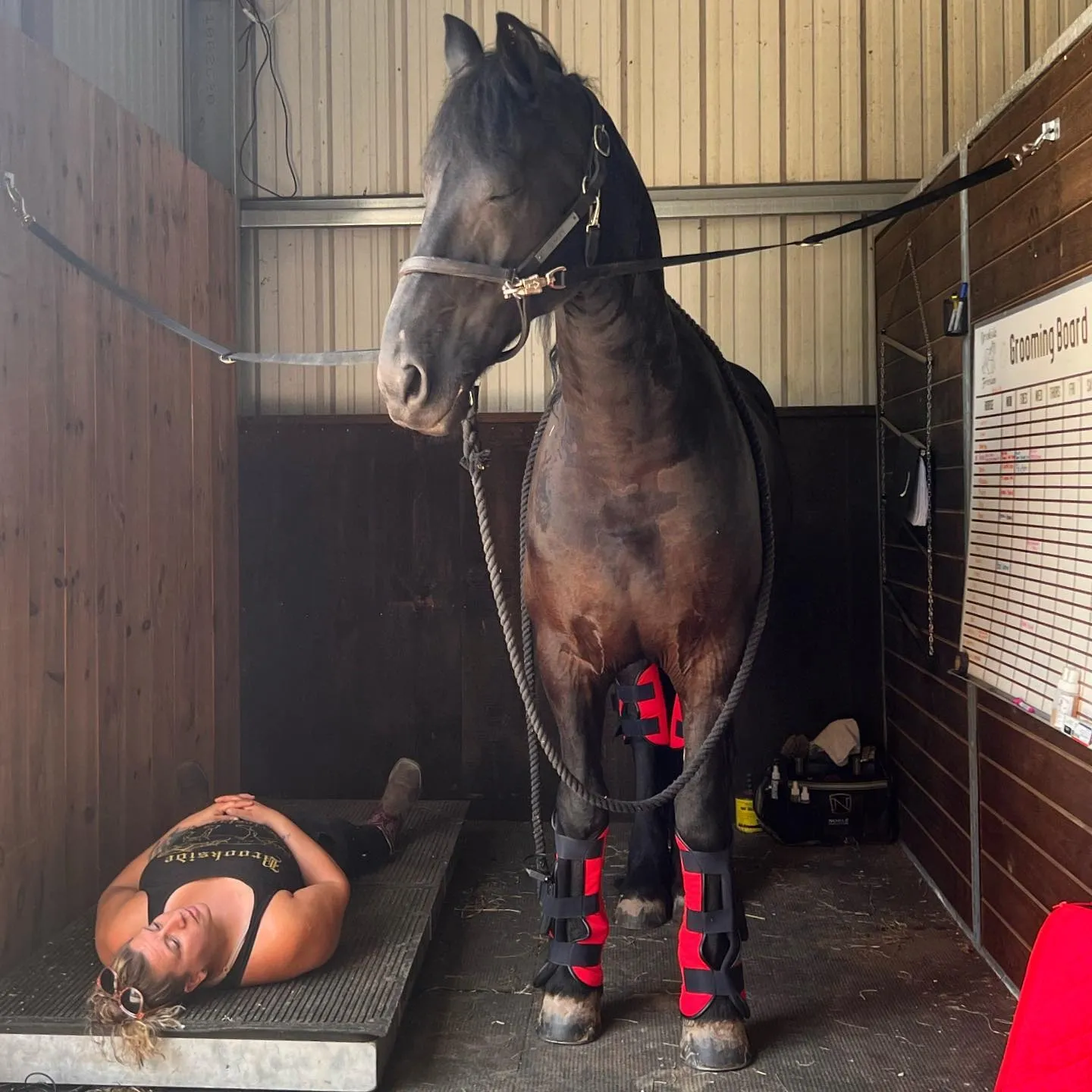
Regular Friesian grooming is essential for maintaining the appearance, health, and performance of this inspiring breed. Known for their long flowing manes, lush tails, and signature feathering above the hooves, Friesians require a consistent grooming routine to prevent buildup of dirt or debris, skin irritation, and tangles in their manes and tails. Grooming isn’t just about appearance—it’s about overall care, bonding, and early detection of issues such as skin infections, fungal infections, and wounds.

At The Farm at Brookside, grooming care is provided as part of boarding. In this article, we’ll cover the basics of Friesian grooming, including daily brushing, mane and tail detangling, periodic overall bathing, washing the mane and tail, and specific care for the distinctive feathering.


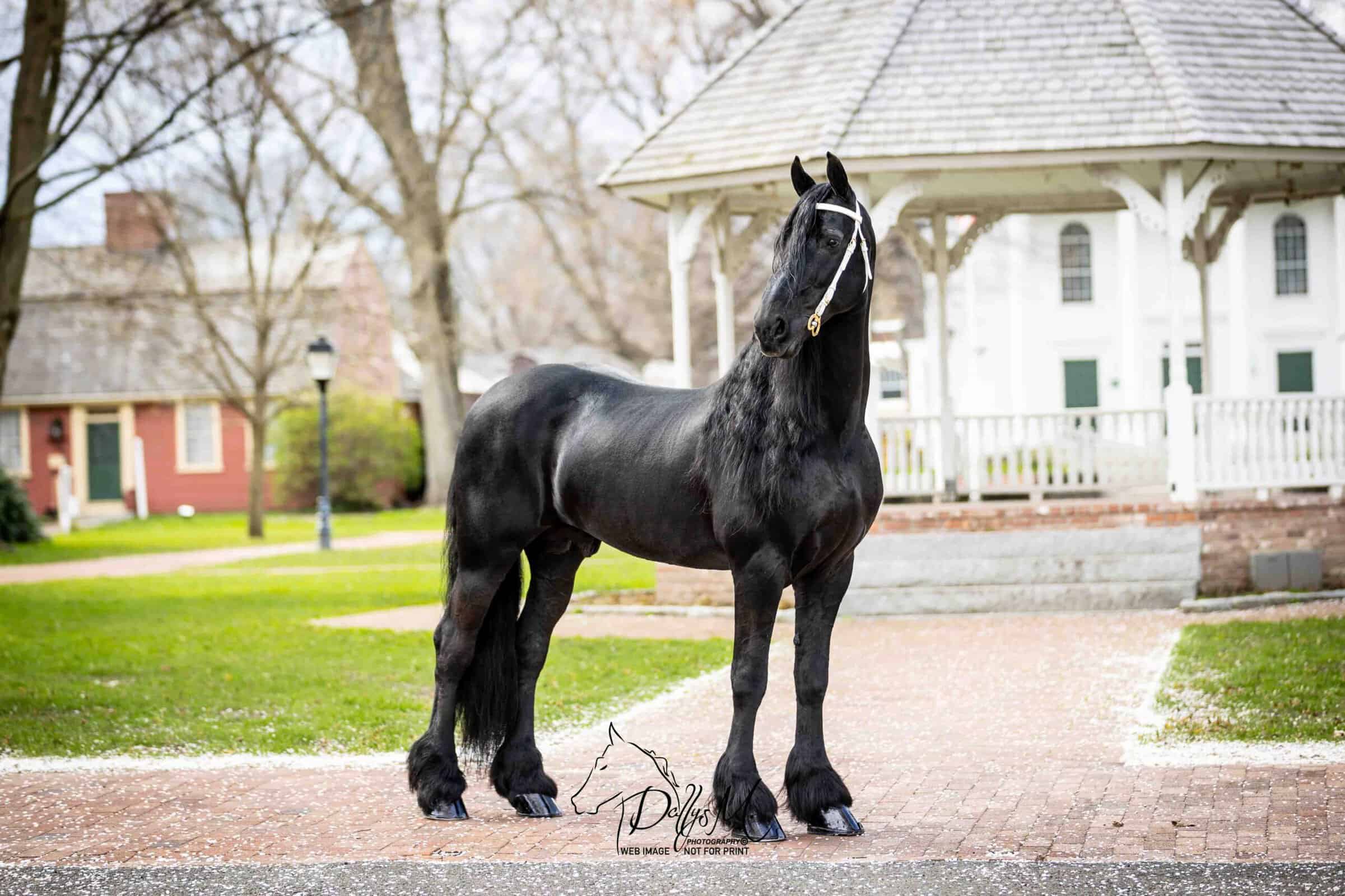
Nutrition for Friesians 2048x1362 72 Res

Daily Grooming Routine for Friesians

Daily Friesian grooming helps remove dirt, debris, and loose hair, while also promoting healthy circulation. It’s especially important for Friesians due to their thick manes, tails, and feathering, which can trap debris and moisture.

Grooming the Body

A Friesian grooming session can include brushing the horse’s body and cleaning/checking the hooves. Different types of tools serve different purposes:

  • Curry Comb: This rubber/plastic brush can be used in a circular motion to loosen dirt, debris, and shedding hair from the coat. Buildup can occur especially under the mane and around the tail. This brushing also can stimulate circulation.
  • Hard or Dandy Brush: Once dirt, debris, and hair are loosened, a stiff-bristled brush can sweep them away. It can be used in short, flicking motions made in the direction of hair growth. This brush may work best on less sensitive areas like the horse’s upper body, but it may be too rough for areas such as the face, belly, and legs. (United States Pony Clubs).
  • Soft Brush / Body Brush / Finishing Brush: A soft-bristled brush removes finer dust and may be used on sensitive areas like the face, belly, and legs. It also can smooth and polish the coat.
  • Hoof Pick: Essential for daily care, this tool removes dirt, mud, manure, and stones from the hooves. Regular hoof cleaning can help prevent thrush and other hoof-related issues. The daily act of examining the hooves—and the horse overall—can help catch infections and injuries early.

Friesians can benefit from a full-body brush down with hoof cleaning/check. Regular grooming also can build trust and partnership between the horse and handler.


Detangling the Mane and Tail

Perhaps the most iconic features of a Friesian are its long thick mane and tail. However, these come with maintenance responsibilities.

Tools and Techniques

  • Wide-Toothed Comb: This is a go-to tool for separating and detangling without breaking strands.
  • Detangling Spray or Conditioner: Light, leave-in products help reduce friction and make combing easier.
  • Fingers First: Some groomers may work mostly with their fingers to gently untangle knots and pick out any debris. They will use a comb only after fingers can be run through the hair without catching on tangles or burrs.
  • Work from the Bottom Up: When using a comb, a general recommendation is to start at the ends of the hair and gently work upward to avoid pulling or breaking hair.
  • Take Care when Brushing/Combing: If daily brushing/combing/fingering is done, a gentle approach plus detangler can help preserve the fullness and richness of the mane and tail.

Braiding the mane can help prevent tangling, especially if the horse is turned out or exercised frequently.


Bathing for Friesians

While daily brushing can be essential, full-body baths may be done periodically. Depending on conditions and activity, some groomers may bathe horses every few weeks, while others may bathe horses once or twice a week.

Bathing Guidelines

  • Use Horse-Specific Shampoo: Choose a mild shampoo that can thoroughly clean the coat without stripping away natural oils.
  • Rinse Thoroughly: Make sure all shampoo is rinsed out to avoid skin irritation.
  • Drying: Dry with towels or allow air drying in a clean low-dust area.
  • Spot Cleaning: Between baths, a gentle rub down with clean damp cloths after daily brushing can remove fine dust/soil and help give the coat a shiny polished look.

Some groomers caution against over-bathing, as frequent washing may strip natural oils from the coat and hair, leading to dryness or irritation.


Washing the Mane and Tail

Mane and tail care is a core component of Friesian grooming, requiring more attention than for other breeds due to their length and thickness.

Best Practices

  • Use Detangling or Moisturizing Shampoos: These can help soften the hair and make combing easier.
  • Massage Gently: Work shampoo into the mane and tail using your fingers, being careful not to create knots or matting.
  • Rinse Thoroughly: Rinse until the water runs clear to ensure no residue remains.
  • Conditioning: After shampooing, apply a horse-safe conditioner to help moisturize and protect against tangling. Some conditioners need to be rinsed out, while others are leave-in conditioners.
  • Dry Completely: Allow the hair to air dry or gently towel dry. Some groomers prefer to follow towel drying with a blow dryer on a cooler setting.

Regular maintenance can help keep the mane and tail full and soft, and can help minimize tangles.


Caring for Feathering

Friesians are known for the long, flowing feathering on their lower legs. While visually striking, feathering can trap moisture, dirt, and microbes, leading to skin issues if not properly maintained.

Cleaning the Feathers

  • Gentle Shampooing: Use a mild shampoo and massage into the hair, taking care to remove any debris.
  • Rinse and Dry: Thorough rinsing is essential to avoid skin irritation. Use towels to dry the areas thoroughly, or allow the feathers to air dry if the environment is clean and dry. Some groomers will finish towel drying with blow drying.
  • Frequent Inspection: Check for signs of irritation, scabbing, or “scratches” (also known as pastern dermatitis).
  • Trimming: Some Friesian owners opt to lightly trim feathers to make care easier, especially during wet months. However, show horses often retain full feathering, so regular attention is even more crucial.

To prevent skin infections, it’s important to keep feathers dry and clean, especially in muddy or humid conditions.


Professional Friesian Grooming at The Farm at Brookside

Friesian grooming requires time, knowledge, and patience. At The Farm at Brookside, we are experienced in handling the grooming needs of Friesians, integrating daily and periodic care into our overall wellness and training routines.

Our expert team uses brushes, shampoos, and techniques to ensure that each horse receives the attention it deserves. We also can share tips on Friesian grooming so owners can use these in their own stables and for shows.

From detangling luxurious manes to caring for delicate feathering, our grooming approach ensures that every Friesian under our care looks and feels its best.


Conclusion

Friesian grooming is not just a practice—it’s a commitment to health, comfort, and elegance. With their thick manes, long tails, and graceful feathering, Friesians require a grooming regimen that addresses their unique qualities.

By brushing daily, detangling with care, bathing periodically, washing the mane and tail thoroughly, and attending to feathering, Friesian owners can keep their horses in peak condition. Regular grooming also strengthens the bond between horse and handler and plays a vital role in early detection of potential health issues.

At The Farm at Brookside, we place importance on our Friesian care practices and welcome inquiries from owners who seek optimal care for their equines. If you’re looking for breeding, training, or rehabilitation services for your Friesian, we invite you to visit thefarmatbrookside.com and contact us.

Source:
DeHerrera, Christine (Iron Spring Farm). “Friesian Grooming Tips” (Archive, Educational). ironspringfarm.com. 20 May 2019. https://www.ironspringfarm.com/news/friesian-grooming-tips/.
Henry, Miles (Horse Racing Sense). “Grooming Friesian Horses: Essential Tips for Care and Health.” horseracingsense.com. 28 November 2024. https://horseracingsense.com/grooming-friesian-horses-guide/.
Klimek, Kim (Horse Illustrated magazine). “Care of Long Manes and Tails.” horseillustrated.com. 1 January 2012. https://www.horseillustrated.com/equine-university-horse-college-horse-grooming-college-session-100-manes-and-tails-article/.

Essential Groundwork for Horses: An Introduction to Training and Trust with 5 Core Exercises

Mare Breeding FAQ

Groundwork for horses is an essential part of horse training, offering a solid foundation for communication, respect, trust, and safety. At The Farm at Brookside, we include groundwork for horses as part of our comprehensive training services. Whether you’re preparing a young horse for their first saddle or improving the behavior and responsiveness of a mature horse, groundwork provides the clarity and confidence that an equine partner needs.

This article introduces the concept of groundwork for horses and outlines general core groundwork exercises that build trust, improve behavior and responsiveness, and reinforce the human-horse partnership.


72253448 372893100320610 1682940590855028736 n

What Is Groundwork for Horses?

Groundwork for horses refers to the training activities performed with a horse while the handler is on the ground. These exercises are designed to improve a horse’s behavior, responsiveness, and relationship with its human partner. Groundwork can use body language, movement, light pressure, and voice to help horses understand expectations, boundaries, and cues before adding the complexity of ridden work.

Through groundwork, a horse learns to pay attention, stay relaxed, respond to light pressure, and develop confidence. The handler uses consistent signals and maintains awareness of his or her own body language. Groundwork for horses can be appropriate for all breeds, ages, and levels of training and can be especially helpful in correcting unwanted behaviors or preparing a young horse for more advanced work.

At The Farm at Brookside, groundwork for horses can serve as a foundation for successful, respectful training.


Why Groundwork Matters

Groundwork is more than just preliminary training—it can help form the core of how a horse perceives and interacts with people. Consistent groundwork can help reduce fear, establish trust and obedience, and address some behavioral issues such as refusing to load in a trailer.

Horses that are responsive and respectful on the ground are generally safer and easier to ride. They are more attentive to cues, more confident in unfamiliar situations, and less likely to spook. Whether you’re training a show prospect or working with a pasture companion, groundwork for horses is time well spent.


Types of Groundwork Exercises

Groundwork for horses includes a wide range of exercises that can be tailored to the horse’s age, personality, and training goals. Five core categories of groundwork exercises are described here:

1. Leading Exercises

Leading exercises teach a horse how to move in coordination with the handler, respect personal space, and respond to cues about speed and direction. There are three common positions used in leading exercises:

The Lead Position
This is when the handler walks in front of the horse, and the horse learns to maintain a consistent distance behind the handler. The horse learns to adjust its pace to the handler’s pace, to follow in the direction of the handler, and to stop when the handler stops. This exercise can reinforce the handler’s role as leader and that the horse should respect the handler’s personal space.

The Partner Position
After leading from the lead position has been established, leading from the partner position may begin. The handler walks beside the horse near the horse’s shoulder, and this can be done on both the left and right sides. The horse learns to stay next to the handler while walking, trotting, halting/waiting, turning, and backing up. The horse should respect the handler’s personal space during the maneuvers.

The Driving Position
Here, the handler walks diagonally behind the horse. The handler can request that the horse move forward, increase or slow its pace, turn, or halt/wait.

Each leading position builds communication and control, which is vital for both everyday handling and advanced training.

2. Touching Exercises

Touching exercises are designed to help a horse become comfortable with human contact, reducing the chances of reactivity or fear when touched. This part of groundwork for horses can be especially important for young or nervous horses.

Stroking
Stroking can involve the handler gently running both hands or a safe object, such as a cloth, over the horse’s body. The goal is to teach the horse that being touched can be safe and pleasant. Stroking can begin on areas where the horse is most comfortable—typically the neck and shoulders—and gradually progress to more sensitive areas like the ears, belly, and tail area. Stroking with a rustling plastic bag can help the horse adjust to the feel and noise of foreign but safe objects and to trust the handler’s care.

Grooming
Grooming is not only essential for hygiene, but also for bonding. During grooming, the handler gets a chance to assess the horse’s physical condition while reinforcing trust and familiarity. Horses learn to stand quietly, lift their hooves when asked, and accept tools such as brushes and hoof picks.

Touching exercises build the foundation for vet handling, farrier visits, saddling, and general desensitization to new stimuli.

3. Responding to Gentle Physical Pressure

An important principle in groundwork for horses is the idea of yielding to pressure. This means that when the handler applies light pressure, the horse responds correctly.

For example:

  • If you you press lightly with a downward pressure behind the horse’s ears, the horse should lower its head.
  • If you apply light pressure to the horse’s chest, the horse should step backward.
  • If you press lightly on the horse’s left shoulder, the horse should step to the right, and if you press lightly on the right shoulder, the horse should step to the left.

Teaching a horse to yield to gentle pressure instills responsiveness, which can be important for loading and handling. It also can help develop a bond between horse and handler.

4. Responding to Driving Aids

In addition to responding to physical touch, horses can learn to respond to driving aids. Driving aids include verbal cues and tools like the lead rope or a training stick.

Driving aids can be used to request movements such as:

  • The horse moving forward, backward, left, or right
  • The horse removing itself from the handler’s personal space
  • The horse halting

5. Moving in a Circle

Moving in a circle is an important component of groundwork for horses. This exercise can require the horse to speed its pace, slow its pace, halt, and reverse direction.

Benefits of moving in a circle include:

  • Preparing the horse for lunging/lungeing, when it will move in a circle, often on a long rope, around the handler and may wear a bit, bridle, and saddle. This allows the horse to become familiar with wearing tack without the added weight of a rider.
  • Reinforcing voice commands.
  • Improving responsiveness and mental focus.

The handler can use the lead rope and body positioning to control the horse’s speed and direction. It’s important that the horse stays attentive and engaged. This exercise can help build fitness and discipline, and can even provide relaxation.


Beyond the Basics: Other Groundwork Activities

Groundwork for horses can also include practical exercises that prepare the horse for real-life situations. One of the most important is trailer loading. A horse that loads calmly into a trailer is safer to travel with and less likely to experience stress or injury. Groundwork training teaches horses to step into the trailer willingly, respond to cues without panic, and wait patiently while secured.

Other activities that may be included in groundwork for horses are:

  • Walking over tarps or poles
  • Standing still for mounting
  • Practicing emergency stops
  • Entering new environments calmly

Each of these experiences reinforces the horse’s trust in its handler and strengthens the skills developed through basic groundwork exercises.


Groundwork for Horses at The Farm at Brookside

At The Farm at Brookside, we provide comprehensive horse training services, and groundwork is an integral part of our approach. Whether a horse is young and green or older and needing refinement, groundwork can be a first step in our program.

We tailor our training to the individual horse, focusing on building a calm, respectful, and willing partner. We use time-tested methods, patience, and consistency to ensure the horse gains confidence and clarity. Our goal is always to set the horse up for success—on the ground, under saddle, and in daily life.

When owners work with us, they gain insight into the groundwork techniques we use and can use these exercises to maintain consistency for their horses at home.


Conclusion

Groundwork for horses is more than a starting point; it’s the foundation of effective and compassionate horse training. By focusing on leading, touching, yielding, and circling exercises, along with real-world training scenarios like trailer loading, trainers can develop horses that are confident, cooperative, and connected to their handlers and owners.

At The Farm at Brookside, we specialize in groundwork for horses as part of our training services. Whether you’re seeking to start a young horse, solve behavioral issues, or build a better bond with your equine partner, our team is here to help.

Visit thefarmatbrookside.com to learn more or inquire about our horse training services. Let’s build a strong foundation—together.

Sources:
AQHA (American Quarter Horse Association). “Groundwork Exercises to Improve Your Relationship with Your Horse.” aqha.com. 2 April 2020. https://www.aqha.com/-/ground-work-exercises-to-improve-your-relationship-with-your-horse.
Kim (Mayo Horse Comfort). “5 Types of Groundwork Exercises for Horses.” mayofarmsystems.co.uk. Accessed 1 July 2025. https://www.mayofarmsystems.co.uk/groundwork-exercises-for-horses/.
Vandenborre, Karine (Horsefulness Training). “Groundwork: The 5 Basic Exercises.” horsefulnesstraining.com. Accessed 1 July 2025. https://horsefulnesstraining.com/groundwork-the-5-basic-exercises/.

Introduction to Rehabilitation for Horses: Understanding 3 Essential Phases of Recovery

Horse Rehabilitation

At The Farm at Brookside, we understand that rehabilitation for horses plays a critical role in ensuring a full and safe return to regular activities, and it must be tailored to the specific needs of each individual animal. Whether a horse is recovering from an injury, managing a chronic condition, or simply overcoming the wear and tear of an active lifestyle, a structured rehabilitation program is essential. This article outlines the three main phases of rehabilitation for horses: Initial Assessment, Treatment, and Recovery; Rehabilitation; and Return to Regular Activities. By following these structured phases, owners and caretakers can support their horses through a complete and thoughtful recovery process.


rehabilitation for horses

Phase 1: Initial Assessment, Treatment, and Recovery

The first step in rehabilitation for horses is the initial assessment. A veterinarian will perform a complete physical and diagnostic evaluation to determine the nature and extent of the issue. Diagnostic imaging such as X-rays, ultrasounds, and MRIs may be used to identify bone and soft tissue (muscle, tendon, ligament) injuries or ailments.

Accurate diagnosis is essential to formulating a treatment plan. This initial phase often includes medical intervention, such as anti-inflammatory medications, antibiotics for infections, or surgical procedures if necessary. Pain management is also a top priority during this period. Horses may be placed on stall rest or limited turnout to allow healing and to prevent further injury or worsening of the ailment.

The duration of this phase depends on the type and severity of injury/ailment. The goal is to stabilize the horse’s condition and promote healing. Monitoring vital signs, maintaining hydration and nutrition, and minimizing stress all can contribute to the horse’s well-being and support the recovery process.

A critical part of this phase includes the caregiver. Knowing how to monitor swelling, lameness, and changes in appetite or behavior ensures timely updates to the veterinary team. This communication is vital to adjusting the treatment plan as the horse begins to show signs of improvement.


Phase 2: Rehabilitation

Once the horse has progressed past the acute phase, structured rehabilitation can begin. This can be the longest and most involved phase of the recovery process. Rehabilitation for horses during this stage involves gradual reintroduction of movement, therapies to enhance healing, and conditioning programs to rebuild strength and coordination.

Controlled Movement and Exercise

A first step in rehabilitation for horses during this phase can be controlled movement/exercise. Hand-walking or walking under saddle may be introduced depending on veterinary recommendation. The goal is to reintroduce correct movement patterns. If progress is made, movement/exercise can carefully increase in difficulty and duration. If basic muscle tone returns, specific customized exercises can be added to address the horse’s needs. Finally, ridden work can be added. Careful attention should be given to saddle and bridle fit, the length of time the horse carries weight, and the gradual increase in exercise complexity. Ridden work can focus on balance and stability. (Ryan, Mad Barn)

In rehabilitation for horses, exercise programs are introduced in small increments, with close monitoring of the horse’s response. If any swelling, discomfort, or lameness arises, the program can be adjusted accordingly.

Cold Laser Therapy

One therapeutic modality that has become increasingly popular in rehabilitation for horses is cold laser therapy. Also known as low-level laser therapy (LLLT), this treatment uses specific wavelengths of light with the goal of providing pain relief, reducing inflammation, and speeding the healing process.

This therapy is believed to relieve pain by stimulating release of the natural painkillers beta-endorphins and the “feel-good” hormone serotonin. Acetylcholine activity may also be enhanced, and this can lead to reduced perception of pain.

Laser therapy is believed to reduce inflammation by increasing circulation to injured/infected areas. The increased blood flow can remove waste from the inflammatory response and provide new immune cells to fight any infection. Inflammation itself can be a cause of pain, so by reducing inflammation, laser therapy would also reduce pain.

Laser therapy is believed to speed healing by increasing tissue cell division and growth, and by increasing collagen production. Collagen is a main element in connective tissue, and increased collagen in healing tissues can in turn increase strength and resilience.

In rehabilitation for horses, cold laser therapy includes other important benefits. Sessions are non-invasive, painless, and relatively short in duration. They can be easy to integrate into a horse’s daily rehab routine. Rehabilitation programs may include cold laser therapy for conditions such as osteoarthritis, strained tendons, and chronic back pain.

Vibration Stimulation Therapy

Another technique being used in rehabilitation for horses is vibration stimulation therapy. This method involves exposing the horse to low-frequency mechanical vibrations, typically through a specialized platform that the horse stands on. Vibration stimulation potentially may stimulate circulation and muscle contractions, and aid in the healing process.

For vibration stimulation therapy and cold laser therapy, it is important to follow protocols established by trained professionals to avoid overexposure or incorrect usage.

Complementary Therapies

In addition to cold laser and vibration stimulation, rehabilitation for horses may include massage therapy, hydrotherapy, chiropractic adjustments, and acupuncture. Each therapy targets a different aspect of the recovery process and can be customized to suit the individual horse’s needs.

Throughout this phase, nutrition also plays a critical role. Feeding a diet balanced in protein, vitamins, and minerals supports tissue repair and maintains muscle condition. Nutritional supplements, such as those formulated for joint or muscle health, may be introduced upon veterinary recommendation.


Phase 3: Return to Regular Activities

The final phase of rehabilitation for horses involves reintroducing them to their normal routines and workloads. This stage should be approached with caution, as rushing the process can lead to re-injury and setbacks. A veterinarian can determine if the horse is ready and if any long-term or permanent changes are needed for routines and workloads.

Monitoring and Evaluation

Close observation is essential. Caregivers and trainers can keep a record of the type, duration, and difficulty of regular daily exercises and how well the horse performs. They can check for any signs of swelling, soreness, atypical movement, or behavioral changes and note occurrences that are potential setbacks needing immediate attention. Caregivers and trainers can also set up regular veterinary check-ups to assess progress. This continual monitoring can help in deciding whether the return process should be adjusted.

Mental Well-being

Rehabilitation for horses is not only physical but also psychological. Horses that have been on stall rest or limited movement may experience boredom or anxiety. Incorporating enrichment activities, turnout time, and social interaction can support mental health. A relaxed, confident horse may be more likely to return successfully to previous activity levels.


Conclusion

Rehabilitation for horses is a comprehensive, multi-phase process that addresses both the physical and emotional needs of the animal. From the initial assessment and treatment to the detailed rehabilitation phase and finally the return to regular activities, each phase plays a crucial role in ensuring a successful recovery.

At The Farm at Brookside, we are committed to supporting horses through every step of their journey. Our team understands that no two horses are the same, and we believe in crafting individualized rehabilitation plans that combine science-backed therapies and attentive care.

Whether you’re helping a performance horse recover from injury or supporting an aging companion through chronic conditions, effective rehabilitation for horses can improve quality of life, extend athletic careers, and restore well-being.

For more information about our facilities and services, visit us at thefarmatbrookside.com.


Frequently Asked Questions

Q: What is the purpose of rehabilitation for horses?
A: Rehabilitation for horses aims to help horses recover from injury, illness, or periods of inactivity and, if possible, return to their regular activities. The process begins with initial assessment, treatment, and recovery. It continues with a period of therapies tailored to the horse’s needs. It concludes with a return to regular activities, guided by continual monitoring and adjustments as needed.

Q: How long does horse rehabilitation typically take?
A: Duration can depend on the injury/ailment, but rehabilitation generally can take weeks to several months. Each phase should be tailored to the individual horse.

Q: Is cold laser therapy safe for horses?
A: Yes, cold laser therapy is generally considered safe and non-invasive when administered by trained professionals.

Q: What are signs a horse is ready to return to work?
A: Consistent soundness, no swelling or discomfort, and veterinary clearance can signal that a horse may be ready to return.

Sources:
Cavinder, Clay, Mississippi State University Extension. “Does Vibration Stimulation Offer an Effective Therapeutic Advantage to Performance Horses?.” extension.msstate.edu. Accessed 25 June 2025. https://extension.msstate.edu/publications/does-vibration-stimulation-offer-effective-therapeutic-advantage-performance-horses.
Ryan, Lucia K. (Author), Kerley, Brittany (Reviewer), Ricard, Madison (Veterinary Reviewer). “Laser Therapy for Horses: Uses, Protocols and Side Effects.” madbarn.com. 28 April 2025 (Updated), 4 October 2024 (Published). https://madbarn.com/equine-laser-therapy/.
Ryan, Lucia K. (Author), Latham, Christine (Reviewer), Rowe, Fran (Veterinary Reviewer). “Equine Rehabilitation Programs: What to Expect When Your Horse is Recovering.” madbarn.com. 1 May 2025 (Updated), 24 December 2024 (Published). https://madbarn.com/equine-rehabilitation-guide/.

Genetic Testing for Friesians: Safeguarding the Future of a Powerful and Majestic Breed

Mare Services

Genetic testing for Friesians plays a vital role in maintaining the health, longevity, and quality of this majestic breed. As stewards of Friesian horses, breeders and owners are increasingly turning to science to identify and manage inherited conditions.

This article explores the importance of genetic testing for Friesians, focusing on three key hereditary conditions: dwarfism, hydrocephalus, and distichiasis. By understanding these conditions and using available genetic tools, breeders can make informed decisions that preserve the integrity of the Friesian horse for future generations.


Friesian Mare Foal Gallop 2048x1365 72 Res

Why Genetic Testing for Friesians Is So Important

Friesians, with their elegance and noble bearing, are also genetically unique. However, selective breeding and a relatively small gene pool have contributed to a higher incidence of certain inherited conditions. Genetic testing for Friesians helps identify carriers of these conditions before they are passed on to foals, allowing breeders to minimize risk mating.

Genetic testing does not limit breeding. Instead, it empowers breeders to continue producing the best horses possible while avoiding preventable health challenges.

An Overview of Hereditary Conditions in Friesians

Equine genetic disorders arise from mutations passed down through generations. In Friesians, three significant inherited conditions are dwarfism, hydrocephalus, and distichiasis. Each presents its own challenges and health concerns, but all can be detected through testing.

Let’s take a closer look at each disorder and how genetic testing for Friesians can reduce their impact on the breed.


Dwarfism in Friesians

What Is Dwarfism?

Dwarfism is a developmental disorder characterized by disproportionate growth and skeletal deformities. Traits can include: shorter than average height, lower than average weight, disproportionately shorter limbs relative to overall body size, disproportionately large head, a broad chest narrowing toward the ribcage’s bottom, and hyperextended fetlocks (“ankles” of a horse).

In Friesians, dwarfism is considered a recessive disorder, meaning that a foal must inherit the mutated gene from both parents to be affected.

How Common Is It?

Dwarfism is a concern in Friesian breeding, especially since carriers show no outward signs of being affected. Perhaps around 12% of the Friesian population are carriers (FRDWF/n) of the mutation. As carriers can appear normal, genetic testing for Friesians is essential to identify horses that carry the mutation and prevent breeding two carriers together.

Role of Genetic Testing

Genetic testing for Friesians can provide a method to determine if a horse is a carrier of the dwarfism mutation. A DNA test—often performed on mane hair—can indicate if a horse is:

  • Clear (n/n): No copies of the gene mutation; not a carrier.
  • Carrier (FRDWF/n): One copy of the mutated gene; no symptoms, but can pass condition to offspring.
  • Affected (FRDWF/FRDWF): Two copies; the horse shows dwarfism and typically has limited longevity and reproductive potential.

Avoiding carrier-to-carrier pairings helps ensure that no foal is born with the disorder.


Hydrocephalus in Friesians

What Is Hydrocephalus?

Hydrocephalus is a condition in which excess cerebrospinal fluid builds up within the brain’s ventricular system. This pressure causes the skull to expand and leads to severe neurological issues, often making the condition fatal.

In Friesian foals, hydrocephalus is apparent at or shortly after birth. Symptoms include an enlarged swollen head, lack of coordination, difficulty standing, and seizures. Most affected foals are either stillborn or require euthanasia shortly after birth.

How Does It Occur?

Like dwarfism, hydrocephalus is inherited as a recessive trait. A foal must inherit the mutated gene from both sire and dam to be affected.

Importance of Genetic Screening

Because carriers of the hydrocephalus gene show no signs of the condition, genetic testing for Friesians is a definitive way to identify them. The DNA test distinguishes between:

  • Clear (n/n): No copies of the gene mutation; not a carrier.
  • Carrier (HDC/n): One copy of the mutated gene; no symptoms, but can pass condition to offspring.
  • Affected (HDC/HDC): Two copies; the foal has hydrocephalus and will be nonviable.

Distichiasis in Friesians

What Is Distichiasis?

Distichiasis is an eye condition in which extra eyelashes grow from an atypical location, oftentimes along the edge of the eyelid. These lashes can grow in various directions and can rub against the eye, causing irritation and even damage.

Although this condition can affect various breeds, Friesians appear predisposed to inheriting it genetically.

What Are the Symptoms?

Symptoms of distichiasis may include:

  • Excessive tearing
  • Excessive blinking
  • Chronic corneal inflammation
  • Corneal ulcers

Genetic Basis and Testing

The genetic basis for distichiasis in Friesians has been identified, and a DNA test is available. This makes genetic testing for Friesians a powerful tool in preventing the spread of the disorder through selective breeding.

Unlike dwarfism and hydrocephalus, which are recessive, the inheritance of distichiasis may be more complex. Two copies of the “variant,” one from the sire and one from the dam, are required to cause the condition. But a Friesian may carry these two copies and not show signs of the condition. However, testing can still show whether a horse carries one or more copies of the mutation, helping breeders assess risk.


How Genetic Testing for Friesians Is Performed

Genetic testing for Friesians can be a straightforward, non-invasive process. Samples are typically collected using the hair root method (25–50 mane or tail hairs with roots intact). These samples are submitted to an accredited equine genetics laboratory.

For (registered) Friesian stallions, genetic testing is mandatory under KFPS regulations and is strongly recommended for Friesian broodmares. In the United States and Canada, testing of Friesians registered with the Friesian Horse Association of North America (FHANA) is facilitated by FHANA and conducted at the University of Kentucky’s Gluck Equine Research Center.


Ethical Breeding and Genetic Responsibility

Breeding Friesians is both a privilege and a responsibility. At The Farm at Brookside, we understand that careful breeding practices protect both individual horses and the breed as a whole. Genetic testing for Friesians allows breeders to:

  • Make informed decisions about mating combinations and prevent the birth of affected foals
  • Reduce the spread of inherited disorders over generations
  • Preserve the breed’s long-term health and viability
  • Maintain an appropriate beneficial level of genetic diversity

It’s not about eliminating carriers from the gene pool—it’s about managing them wisely. With the right pairings, even carrier horses can produce healthy offspring.


The Role of Breeders, Owners, and Registries

Preserving the Friesian breed requires a cooperative effort among breeders, owners, veterinarians, and registry organizations.


Looking Toward the Future

Genetic testing for Friesians has advanced significantly. As new mutations are discovered and testing becomes more accessible, breeders may gain even more tools to protect this treasured breed. Testing for dwarfism, hydrocephalus, and distichiasis can help breeders avoid heartache and financial loss.


Frequently Asked Questions (FAQs)

Why is genetic testing for Friesians necessary?

Genetic testing can identify if a horse is a carrier of a hereditary condition. It enables breeders to make responsible mating choices and avoid producing foals with serious health problems.

Which conditions prevalent in Friesians can be detected with genetic testing?

Currently, tests are available for dwarfism, hydrocephalus, and distichiasis—three conditions known to affect Friesians disproportionately.

Is genetic testing expensive?

Compared to the costs of veterinary care or the loss of a foal, genetic testing can be affordable and highly worthwhile. It can be an investment that saves a great deal of heartache.

Can a carrier horse still be bred?

A carrier horse can be bred—but only if correctly paired with another horse. This prevents the possibility of producing affected offspring.


Conclusion: Protecting the Breed Is Important to Us

Genetic testing for Friesians is not just about science—it’s about stewardship. At The Farm at Brookside, we are deeply committed to producing healthy, sound Friesians that exemplify the best of the breed. To learn more about our breeding, training, and rehabilitation programs, please visit thefarmatbrookside.com or contact us directly.

Sources:
FHANA (Friesian Horse Association of North America). “Distichiasis and Friesian Horses.” fhana.com. 1 April 2021. https://fhana.com/news/distichiasis-and-friesian-horses/.
FHANA (Friesian Horse Association of North America). “Hydrocephalus Gene Test and Dwarfism DNA Test Order Form.” fhana.com. Accessed 17 June 2025. https://fhana.com/app/uploads/2022/04/Hydro_Dwarf-Form-2022.pdf.
Rice, Sara (Author), Darani, Priska (Reviewer), Ricard, Madison (Veterinary Reviewer). “Genetic Diseases in Friesian Horses: Dwarfism, Hydrocephalus, Distichiasis and Other Conditions.” madbarn.com. 1 May 2025 (Updated), 4 December 2024 (Published). https://madbarn.com/genetic-diseases-in-friesians/#:~:text=Genetic%20Diseases%20in%20Friesian%20Horses,Distichiasis%20%26%20Other%20Conditions%20%7C%20Mad%20Barn.
UCDavis, Veterinary Medicine, Veterinary Genetics Laboratory. “Friesian Horse Dwarfism.” vgl.ucdavis.edu. Accessed 19 June 2025. https://vgl.ucdavis.edu/test/friesian-horse-dwarfism.
University of Kentucky Maxwell H. Gluck Equine Research Center, Martin-Gatton College of Agriculture, Food and Environment. “Disease Mutation and Trait Testing.” gluck.ca.uky.edu. Accessed 17 June 2025. https://gluck.ca.uky.edu/disease-mutation-trait-testing.

A Brief Introduction to the Amazing History of the Friesian Horse

The history of the Friesian horse begins in the northern province of Friesland in the Netherlands. The Friesian horse belongs to one of the oldest domesticated horse breeds in Europe. The Friesian is known for its distinctive black coat, long mane, expressive movement, and historical significance in agriculture, warfare, and sport.


history of the friesian horse
Sjees (Carriage) Pulled by a Pair of Friesian Horses (Creative Commons CC0 1.0 Universal Public Domain Dedication)

Origins and Historical Use

In Friesland, native horses were used for general riding and work. According to military records, troops from Friesland rode native horses, the ancestors of modern Friesians, in the 4th century AD. Military use of these horses continued in the Middle Ages, when knights rode them into battle. The breed was recognized for its strength, usefulness, and reliability in warfare. Illustrations depicting Friesian ancestors date back to the 11th century AD, showing early representations in the history of the Friesian horse.

During the Middle Ages, warriors returning from the Crusades with Arabian horses introduced eastern Arabian influence to the Friesian breed. In the 16th and 17th centuries and perhaps earlier, Friesians were bred with Andalusian horses imported from Spain. This influence contributed to their elevated knee action, small head, and elegant neck. These characteristics are still visible in Friesian horses today.


Trotting Role

In the 18th and 19th centuries, Friesians were popular as trotting horses in Friesland. They were raced for shorter distances, for example, 325 meters. As of 1979, it is believed that between 1800 and 1850, over 2,800 newspaper advertisements were printed to promote races. Races first were on horseback, but then began to include the “sjees,” a distinctive carriage the Friesians pulled.

The carriage’s name “sjees” may derive from the French “chaise” to indicate a “chair on wheels.” The carriage’s small body is suspended high above the ground, with wheels 1.5 m high or more. Much of the carriage is painted white, and the body may show elaborate painting, carving, and gilding (Wikipedia). Today, the carriage will carry a gentleman and lady dressed in traditional 1860s costume. The gentleman will wear a black top hat and sit on the left. The lady will sit on his right, in the position of honor. Reenactments of the carriages being driven can serve as a living history of the Friesian horse.

In what would become the United States, Friesians were imported as early as 1625. Newspaper ads from 1795 and 1796 offered “trotters of ‘Dutch’ descent” (fhana.com) that probably were Friesians.

This period saw an interesting change in the history of the Friesian horse. Their use evolved from agriculture, general riding, and warfare to a sporting use.


Decline, Studbook Formation, and Recovery

By the late 19th century, the breed had gone out of fashion. By 1902, only 15 “approved” Friesian stallions remained in Friesland. Crossbreeding nearly eliminated purebreds and marked a crisis point in the history of the Friesian horse.

In 1879, the Studbook began in the Netherlands. It included a Book A for Friesian horses and a Book B for crossbreds. Because crossbreeding was so extensive, in 1907 the books were combined into one book. But in 1913 a small group founded “The Friesian Horse” society and began to work in cooperation with the Studbook, to maintain and improve the Friesian breed. This marked a crucial turning point in the history of the Friesian horse.

In 1914 the Studbook decided (at the society’s request) to once more divide the book. Book A again would be for Friesians and Book B would now be for “Upland” horses. The division went into effect in 1915. Breeders of non-Friesians left the Studbook in 1943, and from then on only purebred Friesians would be listed. The Studbook would receive “royal” designation in 1954 and become “The Royal Society [of] The Friesian Studbook.” This designation and these years marked a significant recovery period in the history of the Friesian horse.


International Expansion

In the mid- to late 20th century, Friesian horses were brought to other countries. In 1974, 1975, and 1977, a total of nine Friesians were brought to North America, where the Friesian Horse Association of North America (FHANA) was founded in the early 1980s. FHANA partners with the Royal Friesian Horse Studbook (KFPS) to oversee registration and inspection.

Today, Friesian horses are found in 70 or more countries. FHANA continues to promote education, events, and the responsible breeding of Friesians in North America.


Breed Characteristics

Friesian horses are known for their solid black color, long mane and tail, and feathering on the lower legs. White markings are not allowed, except for a small “star” on the forehead. The typical height ranges from 15.2 to 16 hands (60.8 to 64 inches from the ground to the withers). The breed is also known for its kind temperament, willingness to work, and intelligence.


Health and Genetic Concerns

The Friesian horse has a limited genetic pool, which makes it more prone to certain conditions. Health issues include:

  • Dwarfism
  • Hydrocephalus
  • Megaesophagus
  • Aortic rupture

Because of these concerns, responsible breeders use genetic testing and follow guidelines set by the KFPS and FHANA. Stallions must undergo rigorous inspection and health screening before being approved for breeding.


Use in Sport and Culture

Today, Friesians are used in a variety of disciplines. They are seen in dressage, driving competitions, parades, and exhibitions. FHANA hosts events that showcase the breed’s abilities and promote community involvement.

The breed is also popular in film and television. Its striking appearance and calm nature make it ideal for performances and on-screen roles. In the history of the Friesian horse, its use has not only encompassed agriculture, transport, warfare, and sport, but now includes modern media presence.


Preservation Efforts

FHANA and the KFPS work to maintain the integrity of the Friesian breed through education, inspections, and strict standards. These organizations promote careful breeding practices to reduce genetic disorders and ensure the breed’s long-term survival.

Thanks to the efforts of dedicated breeders and associations, the Friesian horse has moved from near extinction to global recognition.


Conclusion

The history of the Friesian horse reflects its elegance, strength, and adaptability. From early battlefield use to modern dressage arenas, the Friesian has remained a symbol of heritage and resilience. With continued support from FHANA, KFPS, and the international community, Friesians can remain a treasured breed for generations to come.

At The Farm at Brookside, we strive to preserve and advance the history of the Friesian horse through our breeding services, our Keuring preparation programs, and our rehabilitation capability.

Sources:
Cochran, Caroline (Author), Darani, Priska (Reviewer), Kellon, Eleanor (Veterinary Reviewer). “Friesian Horse Breed Guide: Characteristics, Health, and Nutrition.” madbarn.com. 1 May 2025 (Updated), 7 November 2023 (Published). https://madbarn.com/friesian-horse-breed-profile/?srsltid=AfmBOooU-WHxITrEIC2PpQUzS4PUL7BoPC673Al57g4kTN0Q6jsICm8u.
FHANA (Friesian Horse Association of North America). “Friesian History,” Extract from Het Friese Paard by G. J. A. Bouma, 1979. fhana.com. Accessed 10 June 2025. https://fhana.com/the-friesian-horse/friesian-history/#:~:text=According%20to%20the%20chronicle%20of,for%20mourning%20coaches%20in%20London.

Understanding the Mare Breeding Soundness Exam: Vital Steps in Reproductive Success

Mare Services

One of the most crucial components of equine reproductive success is conducting a thorough mare breeding soundness exam. This comprehensive evaluation helps determine whether a mare is physically and reproductively capable of conceiving, carrying, and delivering a healthy foal.

Whether you’re preparing a maiden mare for her first pregnancy or rebreeding a seasoned broodmare, the mare breeding soundness exam is the gold standard for establishing her suitability for breeding. In this article, we’ll walk through the steps involved in a mare breeding soundness exam. We will reference established practices from veterinary experts that contribute to reliable and successful reproductive outcomes.


Friesian Mare Foal Gallop 2048x1365 72 Res

What Is a Mare Breeding Soundness Exam?

A mare breeding soundness exam (BSE) is a systematic evaluation performed by a veterinarian with reproductive expertise. Its goal is to determine if a mare is anatomically and physiologically fit for breeding. This includes assessing her general health, breeding history, and reproductive anatomy.

Both the Colorado State University Equine Reproduction Laboratory and Mad Barn emphasize that these exams are valuable tools in equine breeding programs. They allow for early identification of issues that could reduce fertility or jeopardize pregnancy.


When Should a Mare Breeding Soundness Exam Be Performed?

A mare breeding soundness exam should be completed at the beginning of each breeding season, to ensure the mare is fit for breeding. The exam can also be helpful in the following scenarios:

  • Before breeding a (maiden) mare for the first time; the exam can be especially helpful for older maidens
  • After a failed breeding or a pregnancy loss
  • Before committing a mare to assisted reproductive techniques such as artificial insemination and embryo transfer; to assess the mare’s suitability for these techniques
  • Before purchasing a mare as a broodmare prospect; as part of a pre-purchase examination
  • When preparing an experienced older mare for the breeding season; fertility can begin to decrease between 10 and 15 years
  • After a successful healthy pregnancy/foaling, to check the reproductive tract for any inflammation, fluid, or infection before breeding again
  • After the breeding season when a mare has proved barren

An ideal time to perform the exam can be during the transitional phase into the breeding season. This timing allows for any issues to be addressed before the breeding schedule begins.


Core Steps of a Mare Breeding Soundness Exam

Below are key components of a mare breeding soundness exam.

1. Comprehensive Medical and Reproductive History

The first step in the mare breeding soundness exam involves gathering a thorough medical and reproductive history. This can include:

  • Mare’s age and breed
  • Diet and nutrition
  • Vaccination status
  • Health issues, injuries, and surgeries
  • Details of estrous cycles
  • Details of breeding history such as age at first breeding, number of attempts required to produce pregnancies, breeding methods used, and number of breedings in the previous season
  • Details of pregnancy history such as date of most recent foaling, issues carrying and delivering foals, ability to produce milk and to mother foals, and any pregnancy losses

A detailed history provides context for interpreting physical and reproductive findings later in the exam.


2. General Physical Examination

Before focusing on reproductive structures, the vet performs a complete physical exam. This can include:

  • Evaluating body condition; broodmares can be slightly heavier than performance horses, but they should not be overweight
  • Checking respiratory and cardiac function
  • Examining musculoskeletal soundness
  • Examining the udder for overall soundness and lactation potential
  • Looking for any systemic illnesses
  • Looking for any hereditary conditions that may be problematic for offspring and would preclude the mare from breeding

A healthy mare is more likely to conceive, carry, and foal successfully. The physical exam helps identify any underlying issues that could interfere with reproductive performance.


3. External Reproductive Examination

The next step of the mare breeding soundness exam is inspection of the external reproductive anatomy. This can include:

  • Conformation of the vulva (Does it form a tight “seal” so air, feces, and other material do not enter the reproductive tract and potentially cause infection?)
  • Positional relation of the vulva to the pelvis
  • Presence of injury or discharge

If the conformation is problematic and the “seal” is not sufficient, a veterinarian can do a Caslick’s procedure. This involves suturing the top two-thirds of the vulva closed. The procedure can be done specifically after breeding to help decrease the chances of infection and pregnancy loss. In this case, sutures can be removed before foaling. For mares not yet pregnant, sutures can be removed before natural breeding and the area re-sutured after breeding. Sutures may be able to remain in place for artificial insemination.


4. Internal Reproductive Tract Palpation and Ultrasound

After the external exam, the veterinarian palpates the internal reproductive tract through the rectal wall (transrectally). This includes:

  • Cervix
  • Uterus
  • Ovaries

Rectal palpation provides tactile feedback about the size, shape, and tone of the anatomy. Transrectal ultrasound is used to detect:

  • Follicular activity on the ovaries
  • Irregular ovarian formations
  • Uterine fluid
  • Uterine cysts

Ultrasound helps identify any abnormalities that may compromise fertility.


5. Vaginal Examination with Speculum (Tube)

Another component of the mare breeding soundness exam involves vaginal examination using a speculum (tube). A veterinarian may prefer to perform this part of the exam after the Uterine Culture and Cytology. The goal is to visually inspect:

  • Cervical external appearance (e.g., color, inflammation); This stage of the process may also include a digital/palpation exam of the cervix to check for tears, thin areas, or other abnormalities
  • Discharge from the cervix that could indicate a uterine infection
  • Urine pooling in front of the cervix
  • Vaginal wall condition (e.g., inflammation, lacerations, scarring)
  • Trauma from natural breeding or from foaling

6. Uterine Culture and Cytology

Uterine health is critical to a successful pregnancy. A sterile appliance with guard (a swab for culture, a swab or brush for cytology) can be used to collect samples. Also, low-volume lavage can be used.

  • Uterine Culture – to detect bacterial growth
  • Uterine Cytology – to check (under microscope) for the presence of bacteria or inflammatory cells (neutrophils); Advantages of endometrial cytology include relative ease of sample collection, quick results, and cost-effectiveness

Together, these tests help detect endometritis or other infection and inflammation that could prevent pregnancy. Endometritis is an inflammation of the uterine lining caused by bacterial infection, fungal infection, and overactive inflammatory response to semen and other foreign material. It is believed to be a major cause of reduced fertility in mares.


7. Uterine Biopsy

For mares with continuing reproductive challenges, a uterine biopsy may be performed. This involves:

  • Taking a small sample of endometrial tissue (from the base of one of the uterine horns)
  • Submitting the sample for analysis to assess condition of the uterine tissue and presence of inflammation “markers”

The biopsy assesses tissue structure, presence of inflammation, presence of fibrosis, and overall tissue health. Mares are graded (I, IIA, IIB, III) according to their likelihood of carrying a foal to term. This is one of the most effective tools in a mare breeding soundness exam to indicate reproductive viability.


8. Further Testing (As Needed)

If regular procedures in the mare breeding soundness exam do not identity the cause(s) of subfertility in a mare, other examinations may be recommended, including hormone analysis, chromosome analysis, and videoendoscopy (hysteroscopy).


Additional Considerations in a Mare Breeding Soundness Exam

The exam does not end with the checklist. Contextual interpretation of all data is vital. For instance, “Category IIB or III mares may still be able to produce embryos that other mares can carry to term through embryo transfer.” (Mad Barn)

Mares are individuals, and successful breeding outcomes can depend on personalized strategies developed from a thorough mare breeding soundness exam.


The Importance of Timing and Planning

The timing of the exam is essential to ensure the mare is ready for the breeding season. Performing a mare breeding soundness exam early allows for treatment plans, recovery time, and scheduling of natural breeding or insemination.

At The Farm at Brookside, we believe that investing in a mare breeding soundness exam can help make successful breedings, healthy pregnancies, and thriving foals possible.


The Role of the Breeding Team

No matter how thorough the exam, it must be supported by a skilled breeding team. From monitoring ovulation cycles to managing insemination and pregnancy care, our experienced professionals work to ensure every mare receives optimal care.

We collaborate closely with owners to create a tailored plan based on each mare’s unique needs.


Summary: Why the Mare Breeding Soundness Exam Matters

The mare breeding soundness exam can be a critical step in a successful breeding program. It offers a comprehensive view of the mare’s reproductive health and can help identify problems before they lead to failed breeding or loss of pregnancy.

At The Farm at Brookside, we take pride in offering quality care rooted in proven science. A mare breeding soundness exam can be a solid first step toward a healthy foal.


For more information or to schedule an appointment with our team, visit thefarmatbrookside.com. Let us help your mare begin her journey toward successful motherhood with a comprehensive mare breeding soundness exam.

Sources:
Artman, Jessica (Author), Kerley, Brittany (Reviewer), Rowe, Fran (Veterinary Reviewer). “Breeding Soundness Exams for Mares: Assessing Reproductive Health [8-Step Guide].” madbarn.com. 1 May 2025 (Updated), 23 November 2023 (Published). https://madbarn.com/breeding-soundness-exam-for-mares/?srsltid=AfmBOoppbrPhYNUWeD8amI2kpZGXT47Z-rnakiCiD8zEfKvGGg2Fq-2f.
Equine Reproduction Laboratory, Colorado State University. “Mare Reproductive Evaluation.” vetmedbiosci.colostate.edu. 15 November 2022. https://vetmedbiosci.colostate.edu/erl/2022/11/15/mare-reproductive-evaluation/.
Johnson, Aime K. Equine Theriogenology Service, Auburn University. “Back to the Basics: Importance and Interpretation of a Breeding Soundness Exam in the Mare.” vetmed.auburn.edu. Accessed 5 June 2025. https://www.vetmed.auburn.edu/wp-content/uploads/2018/09/Mare-BSE-Techniques.pdf.

Stallion Breeding Soundness Evaluation: An Introductory Look at Semen Quality with 5 Measures

Frozen Semen & Storage

At The Farm at Brookside, stallion breeding soundness evaluation plays a pivotal role in ensuring the fertility, genetic excellence, and health of breeding stock. Among the most critical components of this process is stallion semen evaluation. This is a detailed analysis that provides valuable insight into a stallion’s reproductive soundness and potential for producing viable offspring. Whether for natural service, artificial insemination, or frozen semen programs, understanding the parameters of semen quality helps breeders make informed decisions and maintain the highest standards of reproductive care.


126452167 379735163450257 744269570464474536 n

Why Semen Evaluation Matters

Stallion breeding soundness evaluation serves as a cornerstone for responsible breeding programs. It ensures that only healthy, fertile males are used to propagate desired traits within a horse population. Semen evaluation is one of the most telling and measurable aspects of this process. It provides direct evidence of a stallion’s ability to contribute to successful conception and healthy foal development.

In addition to identifying subfertility or infertility, semen evaluation also offers a baseline to compare future reproductive performance, allows for informed decisions about breeding management, and is vital when freezing semen for long-term storage or shipment.


The Process of Collecting Semen for Evaluation

Before semen can be analyzed, it must be collected under clean, controlled conditions to ensure sample integrity. During a typical stallion breeding soundness evaluation, the stallion is brought into a safe and perhaps familiar environment, ideally with minimal stress.

A mount mare may be used to stimulate the stallion. However, dummy mounts are commonly employed to ensure consistency and safety. Semen is often collected using an artificial vagina, which mimics the physical conditions of natural breeding.

It’s important to note that proper handling begins immediately upon collection. The ejaculate is usually filtered to remove the gel fraction. Maintaining the sample at the appropriate temperature during transport to the lab and during processing/analysis is also critical to preserve sperm viability and motility.


Key Components of Semen Evaluation

Once the sample is collected, the stallion breeding soundness evaluation focuses on several specific parameters to assess semen quality. Each of these elements provides essential data about the stallion’s fertility potential:

1. Volume

The total volume of the ejaculate is one of the first measurements taken. This includes the sperm-rich fraction of the semen and can vary depending on the stallion’s age, libido, frequency of collection, and hydration. While a large volume may seem positive, it’s not always indicative of high fertility. Sperm concentration and quality can matter more than quantity alone.

2. Concentration

Concentration measures the number of sperm cells per milliliter of ejaculate. This can be determined by manually counting with a hemocytometer, estimating with a commercial calibrated spectrophotometer (Densimeter), or measuring using a commercial cell counter (NucleoCounter). A typical concentration would be 100 million to 500 million sperm per milliliter. For artificial insemination, one dose should contain a minimum of 500 million progressively motile sperm.

Combining volume and concentration provides the total number of sperm in the ejaculate. This value is essential for determining how many mares could be bred from a single collection and how many insemination doses can be prepared. High total sperm counts can be an asset in commercial breeding operations where multiple breedings from one collection are desired.

3. Motility

Motility refers to the percentage of sperm that are moving and the quality of that movement. Evaluating motility is essential in stallion breeding soundness evaluation because sperm must have the ability to travel to, reach, and fertilize the egg.

There are two key measures of motility:

  • Total Motility: The percentage of sperm that are moving in any manner.
  • Progressive Motility: The percentage of sperm that are moving in a forward manner—this is the subset that matters most for fertility.

Typically, motility is assessed both immediately after collection and after cooling or freezing to determine how well the sperm hold up over time—a critical factor for transported or frozen semen.

4. Morphology

Sperm morphology refers to the structure and form of the sperm cells. Under a microscope, sperm cells are examined for defects in the head, midpiece, and tail. Abnormalities in shape or structure can hinder a sperm’s ability to fertilize an egg or even move properly.

During a stallion breeding soundness evaluation, a trained technician will typically assess sperm cells to determine the percentage that are morphologically normal. A high percentage of defects may indicate an issue with testicular health, age, illness, stress, or an environmental factor like season or nutrition.

Common morphological defects include:

  • Abnormally small or large heads and abnormally shaped heads
  • Detached heads with no tails
  • Abnormal or broken necks
  • Abnormal midpieces
  • Coiled or kinked tails
  • “Droplets” or ball-shaped thickenings on the tails

“Studies have reported that fertility in stallions is positively correlated with the percentage of morphologically normal sperm and inversely correlated with the percentage of sperm with abnormal heads, proximal droplets, and abnormal midpieces.” (Equine Reproduction Laboratory, Colorado State University)

5. Longevity/Viability

Beyond immediate evaluation, semen can be tested for how well it survives over time. This is especially important if semen is intended for cooling, freezing, or shipping. Longevity can be assessed by evaluating motility just after collection and then at 6, 12, 24, and 48 hours.

Assessing longevity is particularly important for programs that involve shipping cooled semen or freezing doses for later use. Some stallions produce semen that performs well fresh but deteriorates rapidly when cooled or stored, limiting their utility in broader breeding programs.


Interpreting Semen Evaluation Results

Once all the key parameters have been assessed, the results of the semen evaluation are interpreted in the context of the stallion’s breeding history, age, and overall health. A stallion may have a lower sperm count but still be highly fertile due to high motility and excellent morphology. Conversely, a stallion with a high sperm count but poor motility or morphology might struggle with conception rates.

Evaluation can be repeated each breeding season as part of breeding protocol. Other reasons can be due to age-related issues or significant changes in the stallion’s activity or environment. The semen also can be evaluated each time the stallion provides semen for shipping to ensure adequate concentration and motility.

Semen also may require evaluations if collected in the winter months, due the effect on sperm production.


When to Perform a Semen Evaluation

Semen evaluation is appropriate in several scenarios:

  • As Part of Pre-Breeding Soundness Exams: Before breeding season, to ensure the stallion is fit for service.
  • Low Conception Rates: If mares are not getting pregnant, a semen evaluation can identify whether the issue lies with the stallion.
  • Semen Cooling, Freezing, or Shipping: To assess how well the semen holds up.
  • Health Monitoring: After illness, injury, or surgery, to ensure reproductive function has not been compromised.

Routine stallion breeding evaluation allows for early detection of potential issues and supports decision-making for both short- and long-term breeding goals.


Conclusion: Why Stallion Breeding Soundness Evaluation is Essential

At The Farm at Brookside, stallion breeding soundness evaluation is not just a procedure—it is a commitment to excellence, animal health, and genetic stewardship. Semen evaluation, as a core part of this process, offers insight into a stallion’s reproductive capability. From volume and concentration to morphology and motility, each data point contributes to a holistic understanding of fertility potential.

Whether preparing for a busy breeding season, freezing semen for future use, or investigating unexpected declines in fertility, semen evaluation can provide the answers breeders need. By relying on rigorous, science-based methods and maintaining a consistent evaluation schedule, breeders can make informed choices that protect the health of their animals and the success of their breeding programs.

We invite you to learn more about our stallion services and commitment to quality by visiting us at thefarmatbrookside.com. If you’re considering a stallion breeding soundness evaluation or have any questions, don’t hesitate to reach out.


Frequently Asked Questions

What is included in a stallion breeding soundness evaluation?
A stallion breeding soundness evaluation can include reproductive history, physical examination, external/internal reproductive examination, libido and mating ability assessment, and semen evaluation.

How often should semen evaluation be done?
Ideally, semen should be evaluated at least once a year before breeding season. Multiple evaluations may be needed to establish a reliable fertility profile.

What do abnormal sperm morphology results mean?
Abnormal morphology can indicate testicular dysfunction, illness, stress, or other environmental or physiological problems. A high percentage of abnormal sperm may impact fertility.

Can a stallion with low sperm count still be fertile?
Yes. If morphology and motility are good, even a stallion with lower sperm counts may achieve pregnancies, though fewer mares may be bred per collection.

Why is semen viability testing important?
Viability testing helps determine how well sperm survive over time, which is critical when using cooled or frozen semen for breeding.

Sources:
Equine Reproduction Laboratory, Colorado State University. “Stallion Reproductive Evaluation.” vetmedbiosci.colostate.edu. 15 November 2022. https://vetmedbiosci.colostate.edu/erl/2022/11/15/stallion-reproductive-evaluation/.
Ricard, Madison (Author), Mortensen, Chris (Reviewer), Bowyer, Cerah (Veterinary Reviewer). “Semen Collection and Evaluation for Stallions: Breeding Guide.” madbarn.com. 5 May 2025 (Updated), 12 October 2023 (Published). https://madbarn.com/semen-collection-for-stallions/?srsltid=AfmBOopMaIOc_Ud3WB2dsD_AgdxS9FJUR8kokKEbIbu3EtMnzwj4iWo8.

Nutrition for Friesians: Supporting a Unique and Powerful Breed

Nutrition for Friesians plays a central role in maintaining the health, longevity, and performance of this distinctive horse breed. Friesians are known for their regal black coats, long manes and tails, “feathered” lower legs, and upright posture. While they have a striking appearance, Friesians also have unique care needs, especially when it comes to their diet.

Understanding nutrition for Friesians requires consideration of their history, metabolism, and common health tendencies. The Farm at Brookside offers breeding, training, and rehabilitation programs informed by breed-specific knowledge, and we strive to support these beautiful animals.


nutrition for friesians

Overview of the Friesian Breed

Friesians originated in the Netherlands and may come from one of the oldest domesticated horse breeds in Europe. They have long been used for riding, driving, and performance. Friesians have a calm temperament and are considered easy to train.

Friesians on average are 15 to 16.2 hands at the withers (roughly 63 inches or taller at the shoulder). They typically weigh around 1,300 pounds. Their strong build and quiet demeanor make them popular for dressage and other disciplines that require powerful graceful movement and trainability.

Despite their power, Friesians can have health challenges. They may experience issues like obesity and gastrointestinal problems, which makes proper nutrition for Friesians essential.


Metabolism and Feeding Considerations

Friesians are known as “easy keepers” and typically require fewer calories to maintain healthy weight and condition. Because of this, they may be more prone to becoming overweight if fed the same as other horses.

This characteristic makes nutrition for Friesians somewhat different. They often can thrive on forage-based diets and do not typically need calorie-dense concentrates or high-starch grains unless they are in heavy work.

Feeding too many calories or providing excessive starch and sugar potentially can escalate health problems such as:

  • Obesity
  • Equine Metabolic Syndrome (EMS) and Insulin Resistance (IR)
  • Gastrointestinal issues

To support healthy weight and metabolic function, their diets should emphasize fiber and low-starch low-sugar forage.


Importance of Forage in the Friesian Diet

Free-choice forage can be beneficial for Friesians. Grass hay at mid-maturity with lower starch and sugar content can generally be appropriate. Since they are efficient at utilizing calories from forage, many Friesians may not require additional energy from grains.

Owners may consider testing forage to determine its nutritional value, especially if a Friesian shows signs of metabolic sensitivity. Adjusting forage types and quantities can help maintain a healthy weight.

In addition to forage/hay, Friesians require plenty of fresh clean drinking water. A Friesian may drink around eight gallons (between five and 15 gallons, depending on circumstance) of water per day. Friesians also require salt and may consume one to two ounces of loose salt per day. Forage, water, and salt can seem very basic to the Friesian diet. But they are essential components of nutrition for Friesians.


Nutrient Balance and Supplements

Friesians often can fill their calorie and protein needs through forage/hay. But because forage can lack important nutrients (essential amino acids, vitamins, and minerals), these horses likely would need supplements.

Necessary to a horse’s diet are macrominerals that include Calcium, Phosphorous, Magnesium, Potassium, Sulfur, Sodium, and Chloride. Important trace minerals (microminerals) include Iodine, Copper, Iron, Zinc, Selenium, Manganese, and Cobalt.

Supplements are available in various forms. Premixes (powdered or granular) and loose mineral powders can be mixed with regular feed. Pelleted supplements are more concentrated and may have higher palatability. Fortified feeds are often pelleted or textured, and complete feeds replace regular forage/ration entirely. Ration/feed balancers usually are in pelleted form and provide vitamins/minerals, protein, and energy. These balancers are more appropriate for working or breeding horses and may not be appropriate for horses with obesity and/or metabolic issues.

Friesians also may benefit from the following (Cochran, madbarn.com):

  • W-3 Oil: This essential fatty acid supplement may help regulate inflammation. The oil contains high levels of omega-3 DHA to support joint health, respiratory function, and coat quality.
  • MSM: This organic sulfur compound may support comfortable movement.
  • Jiaogulan: This herbal supplement may support the production of nitric oxide, important for tendon and ligament health plus normal circulation to the hooves.

Supplements often are needed when forage does not provide sufficient nutrients. However, supplementation should be based on actual nutrient needs, forage analysis, and the direction of an equine nutritionist and/or veterinarian. This works to ensure proper and appropriate nutrition for Friesians.


Common Health Concerns Affected by Diet

Friesians may be more likely than some other breeds to experience certain health issues, some of which are influenced by nutrition.

Obesity

Friesians are predisposed to weight gain, especially if overfed or given high-calorie concentrates. Feeding too much without adequate exercise can quickly lead to an overweight condition, which puts strain on joints and may increase the risk of metabolic disorders.

Digestive Sensitivity

Gastrointestinal problems, such as colic or gut imbalance, can occur more easily in Friesians. A consistent feeding schedule and high-fiber diet help reduce the risk of digestive upset. Sudden changes in feed or low-quality forage should be avoided.

Developmental Disorders

Improper nutrition during growth stages may contribute to developmental issues in young Friesians. Providing balanced nutrients, particularly minerals, can be important to support bone health and prevent structural problems.


Feeding Practices for Friesians

Given their sensitivity and slower metabolism, feeding Friesians requires attention to detail. Best practices for nutrition for Friesians include:

  • Prioritizing grass hay or mixed forage as the main dietary component
  • Avoiding or limiting grain and high-sugar feeds
  • Monitoring body condition regularly to adjust feed accordingly
  • Supplementing with vitamins and minerals as needed
  • Ensuring clean, fresh water is always available
  • Avoiding abrupt feed changes to protect digestive health

Exercise and Weight Management

While Friesians are not as high-energy as some other breeds, they do benefit from regular exercise to help maintain a healthy weight and to support digestion. Light to moderate work, such as riding or driving, helps balance their energy intake and expenditure.

Because of their tendency toward weight gain, combining appropriate exercise with tailored feeding plans is one of the most effective strategies for supporting health.


Long-Term Care and Nutritional Planning

Friesians can live around 20 years, though some can live longer with proper care. As they age, their nutritional needs may shift, especially if they become less active or experience changes in digestion.

Nutrition for Friesians should be adjusted over time based on factors such as:

  • Age
  • Workload
  • Health status
  • Body condition

Working with a veterinarian or equine nutritionist can help ensure the feeding plan continues to meet the horse’s needs throughout its life.


Conclusion

Friesians are a majestic and powerful breed, but they have unique nutritional requirements that must be carefully managed to support their health. Their slower metabolism, tendency toward obesity, and sensitivity to diet make them unlike many other horses.

By focusing on forage, avoiding unnecessary calories, balancing essential nutrients, and maintaining a consistent feeding routine, owners can help ensure their Friesians live healthy and productive lives.

At The Farm at Brookside, we tailor our feeding programs to the specific needs of each horse in our care. Our team understands how to provide proper nutrition for Friesians and works closely with owners to develop responsible feeding strategies.

To learn more about our boarding and care services, visit thefarmatbrookside.com or contact us directly. We’re here to help your Friesian thrive.

Sources:
Anderson, Alyssa (Author), Shruthi, N (Medical Reviewer). WebMD. “What to Know about the Friesian Horse.” webmd.com. 6 March 2025 (Reviewed). https://www.webmd.com/pets/what-to-know-about-friesian-horse.
Cochran, Caroline (Author), Darani, Priska (Reviewer), Kellon, Eleanor (Veterinary Reviewer). Mad Barn. “Friesian Horse Breed Guide: Characteristics, Health and Nutrition.” madbarn.com. 7 November 2023 (Published), 1 May 2025 (Updated). https://madbarn.com/friesian-horse-breed-profile/?srsltid=AfmBOop4vMJ5d4RxvSpmLcDAioFuWnmtXKPLYqP7s_3c52bFIZJc-7FG.
Thomas, Jaime (Author), Darani, Priska (Reviewer), Bowyer, Cerah (Veterinary Reviewer). Mad Barn. “How to Choose the Best Mineral Supplement for Your Horse.” madbarn.com. 4 November 2022 (Published), 28 April 2025 (Updated). https://madbarn.com/mineral-supplements-for-horses/.

Keuring Preparation: A Detailed 7-Point Overview for Showcasing Friesian Excellence

At The Farm at Brookside, we believe that proper Keuring preparation can make all the difference in showcasing your Friesian. Whether you’re presenting a foal, yearling, filly, colt, mare, or stallion, Keuring—derived from the Dutch word for “inspection”—is a critical milestone in a Friesian’s life. Keurings are more than just a beauty contest. They are essential to upholding the breed standard and evaluating conformation, movement, and potential breeding value.

In this article, we’ll guide you through essential steps of Keuring preparation. We will explain what to expect at the event and share expert advice so your Friesian can put its best hoof forward.


keuring preparation

What Is a Keuring?

A Keuring is a formal inspection held by breed registries such as the Friesian Horse Association of North America (FHANA) or the Royal Association of the Friesian Horse Studbook (KFPS). Horses are evaluated on conformation, movement, temperament, and overall quality. The goal is to ensure that breeding stock maintains or enhances the high standards of the Friesian breed.

Keuring results can determine if a horse receives coveted titles like Star/Ster, Crown/Kroon, or Model. These Keuring predicates significantly enhance the horse’s value and reputation and can open doors for future breeding or performance careers.


Why Keuring Preparation Matters

Keuring preparation is not a last-minute endeavor—it’s a comprehensive, months-long process. Horses that are physically and mentally prepared for the event are more likely to earn high scores from the judges. Preparation affects everything from your horse’s muscle tone and coat quality to how confidently they move through the triangle.

With so much riding on the inspection, Keuring preparation should merit the same importance as training for a major show.


Step 1: Know the Keuring Standards

Before you do anything else, study the Keuring handbook and criteria published by FHANA or your respective breed organization. Understand what the judges are looking for. Keuring judges assess:

  • Conformation: Breed type, overall balance and proportionality, and correctness of legs.
  • Movement: Walk and trot are assessed for elasticity, power, and correctness.
  • Breed Expression: The horse should show classic Friesian traits. Ideally these include a noble head, long vertical neck, abundant mane and tail, and jet black hair color.
  • Condition: Horses should be fit, shiny, and well-groomed.

Take time to watch videos of past Keurings. Familiarize yourself with how the event is run and what successful presentations look like.


Step 2: Begin Conditioning Early

Physical conditioning should begin at least 90 days before the Keuring. The conditioning process will vary depending on the age and type of horse, but all Keuring preparation should prioritize:

  • Topline and Muscle Development: Encourage development of the neck, back, and hindquarters. Hill work, long-lining, and ground poles can be helpful.
  • Endurance and Fitness: Horses need to trot for extended periods during the inspection, so building cardiovascular stamina is key.
  • Balanced Diet: Work with your vet or equine nutritionist to ensure your horse is on a diet that promotes lean muscle, strong hooves, and a gleaming coat.

A fit horse with good muscle tone and bright energy will stand out to the judges—and they’ll notice the effort.


Step 3: Perfect the Triangle Pattern

The triangle is a Keuring staple. Horses are walked and trotted in a triangle in-hand so judges can assess conformation and movement from multiple angles.

  • Start with In-Hand Training: Ensure your horse is comfortable being led and is responsive to halter cues.
  • Practice Precision: Work on clean, straight lines at the walk and trot. Turning corners gracefully can take time to master.
  • Use a Handler: In some cases, a professional handler may be the best choice, especially for young or spirited horses.

Practicing this pattern repeatedly is a critical part of Keuring preparation and builds confidence for both horse and handler.


Step 4: Master the Stance

During the conformation assessment, the horse must take a poised, alert stance that displays its physique to best advantage. Tips for an ideal stance:

  • Neck arched and head up, to show expression
  • Front legs square and weight-bearing
  • Hind legs slightly staggered for depth

This can be one of the trickiest parts of Keuring preparation, as it combines patience, poise, and subtle handling.


Step 5: Coat and Mane Care

Your horse’s presentation should be nothing short of stunning on Keuring day. Regular grooming is essential in the months prior.

  • Daily Grooming: Helps circulation and coat shine. Use curry combs, soft brushes, and coat conditioners.
  • Bathing: In the final days leading up to the event, give your horse a thorough bath.
  • Mane and Tail: Hallmarks of the Friesian breed. Keep them detangled, moisturized, and conditioned.
  • Clipping: Any trimming or clipping should comply with current regulations and practices. The Friesian standard favors a more natural look.

Step 6: Mental Preparation

Keuring is a new environment filled with other horses, people, and unfamiliar noises. Young or inexperienced horses can easily become overwhelmed. Try to socialize and desensitize your horse in advance.

  • Practice calmly loading into and calmly unloading from a trailer.
  • Visit other farms or showgrounds.
  • Accustom your horse to sounds and stimuli that it would experience just before or during the inspection.

Your horse’s calm demeanor and obedience during the Keuring are just as critical as its physical appearance.


Step 7: Know What Paperwork Is Required

Keuring isn’t just about showing up with a polished horse—you’ll need the correct documents:

  • Entry form confirmations
  • Registration papers
  • Health documents/certificates that may include Coggins test results
  • Handler information (especially if using a pro handler)

Plan ahead to avoid last-minute stress.


What Happens at the Keuring?

On Keuring day, you’ll check in and follow a carefully scheduled timeline. Events may include:

  • Linear Scoring: Judges rate specific traits (neck length, hindquarter shape, etc.) on a numeric scale.
  • Walk and Trot: Done in-hand on the triangle.
  • Free Movement: Some categories include a loose-movement evaluation.
  • Foal Judging: The mare and foal are stood up next to each other, before the jury, with the foal closest to the judges. The foal then will be turned loose to follow the mare and her handler around the ring. The foal then will be caught and stood up in front of the jury, but facing the other direction. (KWPN of North America, Keuring Procedures)

After evaluations, scores are announced, and premiums, predicates, and special designations may be awarded.


Understanding the Judging Scale

Friesians presented for foal book or studbook are rated with premiums that are official rankings. These rankings are recorded in horses’ registration papers. A linear scoring system is used for three-year-old mares and geldings. The linear score is in addition to the premiums and includes point scores on conformation, breed characteristics, and movement. The premiums are as follows:

  • First Premium (1e premie): Highest quality, exceeds the breed standard
  • Second Premium (2e premie): Above-average, meets the breed standard
  • Third Premium (3e premie): Acceptable
  • No Premium: Did not meet the standard

Additionally, predicates such as Ster (Star), Kroon (Crown), and Model can be achieved for eligible horses based on Keuring results, sport performance (if applicable), or other criteria. (Stallion Keuring is separate from other Keuring.)


Common Mistakes in Keuring Preparation

Even seasoned owners make missteps. Avoid these common pitfalls:

  • Late Preparation: Starting conditioning a few weeks before the Keuring may be too late to make meaningful improvements.
  • Overfeeding: Some owners think heavier equals healthier. The ideal Friesian is fit and of appropriate size.
  • Poor Handling: Untrained handlers or tense horses can undermine months of preparation.
  • Neglecting Details: Issues like dirty hooves or tangled manes can detract from a good first impression.

Successful Keuring preparation is in the details—both large and small.


Consider Hiring a Team

Many owners turn to experienced professionals for help with Keuring preparation. At The Farm at Brookside, we offer comprehensive support from conditioning and grooming to handling and scheduling. A collaborative team can ease stress and boost your horse’s chances of success.


Final Week Checklist

Seven days out, your Keuring preparation may focus on fine-tuning and maintaining condition. Here’s a potential checklist:

  • ✅ Practice triangle pattern
  • ✅ Practice loading into and unloading from a trailer, especially with foals and young horses
  • ✅ Provide final bath and grooming sessions
  • ✅ Double-check tack and halters for cleanliness and fit
  • ✅ Ensure all paperwork is ready
  • ✅ Confirm schedule and arrival time

By Keuring day, your horse should be calm, confident, responsive, and radiant.


Celebrate the Experience

Regardless of your final score, each Keuring is an opportunity to learn and grow. The process can deepen your bond with your horse. It can also connect you with the Friesian community and reinforce the standard of this majestic breed.

At The Farm at Brookside, we value every step of this journey. From a foal’s first premium ribbon to a mare earning her Crown/Kroon title, we know how much goes into Keuring preparation.


Conclusion

Keuring preparation is a rewarding but rigorous process that reflects your commitment to the Friesian breed. With thoughtful conditioning, skillful training, and thorough grooming, you can present a horse that radiates type, presence, and athleticism. The key to a successful Keuring lies in starting early, staying consistent, and partnering with a knowledgeable team.

If you’re preparing a Friesian for inspection, we’d love to help. Each season we offer a limited number of spots for Keuring preparation. Contact The Farm at Brookside to learn more about our comprehensive services. Let’s bring out the best in your horse—together.

Sources:
Alberta Friesian Horse Association. “Keuring/Inspection.” afha.ca. Accessed 5 May 2025. https://www.afha.ca/keuring/.
Baker, Lisa. FHANA (Friesian Horse Association of North America). “The Friesian: Do Your Homework.” fhana.com. 2 September 2022. https://fhana.com/news/the-friesian-do-your-homework/.
KWPN of North America Inc. “Keuring Procedures.” kwpn-na.org. Accessed 5 May 2025. https://kwpn-na.org/keurings/scoring-procedures/keuring-procedures/.
Ontario Friesian Horse Association. “Keuring.” ontariofriesianhorse.com. Accessed 5 May 2025. https://ontariofriesianhorse.com/?page_id=76.

Mare and Foal Care: A Detailed Starter Guide to Birth and Early Life

At The Farm at Brookside, we know that nothing is more exciting—and more delicate—than the arrival of a new foal. Proper mare and foal care during birth and the first hours of life sets the foundation for a healthy, thriving horse. In this guide, we’ll walk you through the essentials of mare and foal care. We will focus on what happens during foaling and how to support both mare and foal in the first critical days.

Whether you’re a first-time owner or a seasoned breeder, understanding mare and foal care is essential to ensuring safety, health, and a strong start for your newborn.


mare and foal care

Preparing for Foaling

Mare and foal care starts well before labor begins. About four to six weeks before the expected due date, the mare should be moved to a clean, quiet, and well-bedded foaling location.

Vaccinations should be updated prior to foaling, ideally three to six weeks before the mare’s due date. This boosts the antibodies passed to the foal through colostrum, the nutrient-rich first milk that is essential for building the foal’s immune system. Deworming may be advisable every two to three months during pregnancy. Pregnant mares overall can be kept on a deworming schedule similar to that used for other horses. But product labels should be read carefully so an appropriate and safe dewormer is used.

Daily monitoring of the mare becomes especially important during the final month of pregnancy. Signs of impending labor can include:

  • Behavioral changes like restlessness or nesting (gathering hay or straw to create a “nest”)
  • Swelling of the udder as it fills with milk and waxing of the udder as wax-like beads of colostrum form on the ends of teats
  • Relaxation of the pelvic ligaments
  • Elongation of the vulva

The Three Stages of Labor

Understanding the stages of labor is a key part of mare and foal care. Here’s what to expect:

Stage 1: Early Labor (1-6 hours)

This stage involves uterine contractions and positioning of the foal. Mares may act colicky, get up and down, pace, sweat, look at their flanks, and urinate often. It’s best to observe quietly, ensuring the environment is calm and undisturbed.

Stage 2: Delivery (20-30 minutes)

Once the water breaks, the foal should be delivered within 20 to 30 minutes. The front feet appear first, one slightly ahead of the other, followed by the nose, head, chest, and the rest of the foal. If the mare pushes for more than 30 minutes without progress, a veterinarian should be called immediately.

Stage 3: Expulsion of the Placenta (within 3 hours after delivery)

The placenta should pass naturally within three hours. Retained placenta is a serious condition requiring immediate veterinary attention, as it can lead to infection and laminitis.

At The Farm at Brookside, our team is on standby for all foalings to assist and intervene when necessary, always prioritizing the safety of both mare and foal.


Immediate Postpartum Mare and Foal Care

Once the foal is born, the clock starts ticking on a few vital milestones. These are known as the “1-2-3 Rule” of mare and foal care:

  • 1 Hour: The foal should be standing
  • 2 Hours: The foal should be nursing
  • 3 Hours: The placenta should be expelled from the mare

Failure to meet any of these milestones warrants a call to the veterinarian.


Foal Vital Signs and First Check

Within the first hour, check the following:

  • Breathing: 60 to 80 breaths per minute for the first 30 minutes; 30 to 40 breaths per minute from 1 to 12 hours post foaling
  • Heart rate: Over 60 beats per minute (bpm) at 1 to 5 minutes post foaling; 80 to 130 bpm at 6 to 60 minutes post foaling
  • Temperature: Normal is 99.5°F to 101.5°F
  • Gums: Pink and moist
  • Nursing: Signs of a strong suckle reflex

The foal should also pass its first feces, called meconium, within 6 to 12 hours. A failure to do so could indicate a blockage and may require veterinary care. At the Farm at Brookside, an enema administered to the newborn foal is included as part of the Foaling Package.


The Umbilical Cord and Navel Care

The umbilical cord usually breaks naturally as the mare or foal rises. The foal’s stump may be dipped in an appropriate disinfecting solution (chlorhexidine) every 8 hours for 48 hours to prevent infection. At The Farm at Brookside, we monitor the navel area closely for signs of heat, swelling, or discharge, all of which could indicate infection.


The First Nursing

Colostrum is rich in antibodies that protect the foal from disease. It’s essential the foal receives colostrum within the first 8 to 12 hours of life.

At The Farm at Brookside, we monitor colostrum quality and ensure the foal has nursed adequately. If there’s any doubt, we may recommend supplemental colostrum, colostrum substitute, or plasma therapy if needed.


The Mare’s Postpartum Health

Mare and foal care doesn’t end with the foal’s birth. The mare must be monitored for:

  • Complete expulsion of the placenta
  • Temperature
  • Postpartum bleeding
  • Appetite and water intake
  • Comfort and behavior changes

A mare may experience temporary soreness or fatigue, but ongoing discomfort, fever, or depression requires prompt veterinary care. Always examine the placenta to ensure it’s intact and note any abnormalities in the mare that may signal problems.


Bonding and Behavior

The early bond between mare and foal can be essential. Normal behaviors include:

  • Nuzzling
  • Frequent nursing
  • The mare nickering (“calling”) and licking the foal

When to Call a Veterinarian

Mare and foal care sometimes requires professional help. A vet should be contacted if any of the following is observed:

  • Foal not standing or nursing in the first two hours
  • Foal continually strains to urinate or defecate
  • Swelling or discharge in foal’s umbilical stump
  • Retained placenta in mare (not expelled within three hours of delivery)
  • Signs of colic in mare or foal
  • Fever or abnormal behavior in mare or foal

Why Choose The Farm at Brookside for Mare and Foal Care?

At The Farm at Brookside, we are passionate about equine care. Our experienced team provides:

  • Full board with specialized nutrition for pregnant and nursing mares
  • 24-hr video monitoring with onsite owners
  • Milk testing to predict impeding foaling
  • Evaluation of the quality of the dam’s colostrum
  • Foal imprinting
  • Umbilical cord care (for foal) post foaling
  • IgG test to assess foal’s immunity
  • Enema administered to newborn foal
  • Foal and postpartum mare examination

We pride ourselves on providing a safe and nurturing environment where mares and foals can thrive. From ultrasounds and breeding support to perinatal care and equine training, The Farm at Brookside is your trusted partner.


Final Thoughts

Mare and foal care during and after birth is both a science and an art. It requires careful observation, timely intervention, and a lot of love. By preparing ahead, knowing what to expect, and having a reliable team by your side, you can ensure a smooth start for both the mare and her newborn foal.

If you’re looking for expert mare and foal care, trust The Farm at Brookside. We strive to provide a safe, supportive, and successful perinatal experience for both mare and foal. Learn more at thefarmatbrookside.com.

Sources:
Cornell University College of Veterinary Medicine. “Foal speed ahead: Caring for the newborn horse.” vet.cornell.edu. 3 February 2023. https://www.vet.cornell.edu/about-us/news/20230203/foal-speed-ahead-caring-newborn-horse.
Holyoak, Reed and Hiney, Kris. OSU Extension, Oklahoma State University. “Foaling Management and Care of the Nursing Foal.” extension.okstate.edu. November 2024 (Id: AFS-3985). https://extension.okstate.edu/fact-sheets/foaling-management-and-care-of-the-nursing-foal.html.
Madill, Scott, Malone, Erin, and Ward, Christie. University of Minnesota Extension. “Caring for your mare during breeding and foaling.” extension.umn.edu. Reviewed 2021. https://extension.umn.edu/horse-health/caring-your-mare-during-breeding-and-foaling#deworming-and-vaccinations-67062.