Keuring for Friesian Stallions: A Detailed Overview with 4 Integral Steps

Friesian Stallion Breeding

At The Farm at Brookside, we understand the value of preparing Friesian stallions for the Keuring process. Keuring for Friesian stallions is more than just an evaluation. It’s a gateway to breeding approval, show accolades, and enhanced prestige in the Friesian horse community. For owners and breeders alike, understanding this multi-step process can make a difference when aiming for success.

In this overview, we walk you through integral steps and information on Keuring for Friesian stallions. We take you from what Keuring is and why it matters, to what judges look for, how to prepare, and what happens after the inspection.


keuring preparation for stallions

What is Keuring?

The term Keuring originates from the Dutch word for “inspection.” For Friesians, Keuring is a rigorous judging process organized by the Royal Association of The Friesian Horse Studbook (KFPS) and its North American affiliate, FHANA (Friesian Horse Association of North America). Keuring for Friesian stallions is distinct in that it involves more in-depth scrutiny, especially when a stallion is to be considered for breeding approval.

Each year, FHANA organizes Keurings across North America, where Friesians are judged on conformation, movement, and overall suitability for breeding or competition. However, the Keuring for Friesian stallions is especially critical, as only a select number of stallions meet the rigorous standards for provisional or full breeding approval.


The Importance of Keuring for Friesian Stallions

Keuring for Friesian stallions holds tremendous significance for owners, breeders, and the future of the breed. Only approved stallions are allowed to pass on their lineage within the official KFPS system. This serves to maintain the breed’s superior quality.

In essence, the Keuring for Friesian stallions not only validates the horse’s genetic quality but also impacts the stallion’s legacy and career trajectory.


The Keuring Process

Keuring for Friesian stallions is a formal evaluation system overseen by the KFPS and FHANA. The process follows a defined series of steps designed to identify and promote stallions that meet the breed’s highest standards. The official stallion approval process includes the following steps:

  1. Stallion Judging Options in North America:
    • Option 1: Stallions age 2 to 5 can register for a local inspection and then move on to a stallion viewing for Official Stallion Judging in North America.
    • Option 2: Stallions age 2 to 5 can register directly for one of the stallion viewing events to participate in Official Stallion Judging in North America.
  2. First and Second Viewings (Official Stallion Judging with Members of an Official KFPS Stallion Jury):
    • “First Viewing”: Stallions will be stood for linear scoring and then walked and trotted in-hand in the triangle. Judges will provide comments and may ask that stallions return for judging their movement “at liberty.”
    • “Second Viewing”: Stallions that progress to this viewing will undergo another judging as they are presented in-hand in the triangle. They also will undergo a preliminary veterinary exam.
    • Stallions that progress will then be referred on to Presentation Days. Stallions will have to meet specific standards of radiological examination and semen evaluation to become official participants in Presentation Days. Owners are responsible for having the tests made and the results submitted promptly.
  3. Presentation Days (2 Videos and a “Live” Assessment):
    • For stallions that progress on to Presentation Days, the owners will need to place the horses in training under saddle. This training will be similar to that required for an IBOP (aptitude) test.
    • Video 1: Shows the stallion under saddle and standing still, walking, and trotting. The stallion should be shown from all sides. The video should not include music or special effects such as slow-motion. For stallions that progress, the KFPS Stallion Inspection Jury will provide advice on training and video recording.
    • Video 2: Submitted six weeks later. For stallions that progress on from the Video 2 assessment, the next evaluation will be “live” and on the first day of the 70-Day Test.
    • “Live” Assessment: Stallions will be assessed under saddle. Those that progress will be invited to participate in the 70-Day Test.
  4. 70-Day Test:
    • The location and the trainers are selected by FHANA with the approval of KFPS.
    • Owners cannot communicate with test trainers during the test, but may visit to observe their stallion(s) when the KFPS Stallion Jury is present on Days 1, 35, and 70. The jury will judge stallions on these days, and jury members will communicate only with trainers.
    • Stallions that pass are awarded a provisional breeding license by the KFPS. This license spans five seasons with a 180-breedings-per-year limit (not including frozen semen breedings).
    • If a stallion has 40 offspring viewed at official inspections and 20 participate in an ABFP test with sufficient results, the stallion will receive a permanent breeding license. This license will have no restrictions on breeding amount. The ABFP test is the “General Aptitude and Utility Test for Friesian Horses.” It assesses aptitude for dressage and/or driving and/or show driving, plus willingness to work and stable behavior (https://fhana.com/app/uploads/2019/10/ABFP-test2012.pdf).

Only a small number of stallions progress through all stages each year. This rigorous process ensures that only the highest-quality Friesian stallions receive breeding rights within the KFPS system.


What Judges Look For

During a Keuring for Friesian stallions, the judges are looking at specific qualities to ensure the stallion can enhance the breed. These include:

  • Conformation: Breed type, overall balance and proportion, and correctness of legs.
  • Movement: The walk ideally would show long strides and powerful expression. The trot would also show these attributes, along with upstanding posture, suppleness, and a high rhythm of movement.
  • Breed Expression: The horse should show classic Friesian traits. Ideally these include a noble head, long vertical neck, abundant mane and tail, and jet black hair color.
  • Condition: Horses should be fit, shiny, and well-groomed.

Preparing for Keuring for Friesian Stallions

Preparation is key to a successful Keuring. At The Farm at Brookside, we work closely with owners to ensure that each Friesian stallion is prepared. A minimum of three months is required. Preparation can include:

  1. Fitness and Conditioning
    • Conditioning programs are designed to build strength, endurance, and flexibility. They are tailored to the individual needs of each horse. Training is well rounded and can include ground work, pole work, hill work, long lining, and under saddle work.
  2. In-Hand and “At Liberty” Performance
    • Working with our trainers/handlers potentially can enhance in-hand and “at liberty” performance.
  3. Proper Grooming and Presentation
    • Long, flowing mane and tail should be clean and well-maintained.
    • Feathering fluffed and brushed.
    • Our program includes regular bathing and braiding, along with necessary grooming/care supplies.
  4. Nutrition and Wellness
    • Ensure optimal health with quality feed and supplements. Our staff will administer supplements provided by the owner.
    • Our staff can arrange for farrier and veterinary care as needed.
  5. Mental Readiness
    • Working with our trainers/handlers potentially can prepare horses for the stimuli, interactions, and tasks they will face during inspection.
    • Our staff also can provide behavioral modification to identify root causes of any undesirable behaviors and correct them. The goal is to create a harmonious relationship between horse and handler.

Our facility offers experienced trainers and handlers to guide stallions through necessary steps to prepare for Keuring.


What to Expect at the Inspection

Keuring day is a culmination of all the preparation and training. Here’s a general abbreviated list:

  • Measuring:
    • Stallions will be measured before inspection and microchips will be scanned.
  • Entering the Arena:
    • Stallions as a group will enter and walk in a circle to become accustomed to the surroundings. Walking can be done with the owner, trainer, or a handler.
  • Inspection for Conformation and Movement:
    • Judges will inspect each stallion as it stands and they will complete a linear scoring sheet. The stallion will then be assessed as it walks and trots in-hand in the triangle.
  • Free Movement:
    • The stallion may be released in a controlled arena to show natural movement “at liberty.”
  • Veterinary Inspection:
    • Depending on the phase, an exam may be conducted.
  • Judging Panel Feedback:
    • Immediate or later, the judges provide comments and determine if the stallion progresses.

Every part of Keuring for Friesian stallions is conducted with high formality, and presentation is key.


Why Choose The Farm at Brookside?

When preparing for Keuring for Friesian stallions, the expertise and environment you choose matter. The Farm at Brookside provides the facilities, experience, and passion to ensure your stallion is ready to meet the breed’s highest standards. We offer:

  • Training packages that include grooming
  • Customized programs with a holistic approach
  • In-hand training
  • Veterinary and farrier care when needed

Conclusion

Keuring for Friesian stallions is a demanding but rewarding journey. It not only sets the benchmark for a stallion’s career but also contributes to the long-term excellence of the Friesian breed. From conformation and movement to offspring quality, every detail counts.

At The Farm at Brookside, we take pride in taking this journey with you. Whether you’re presenting a young hopeful or preparing a proven performer, our goal is to maximize your stallion’s potential.

For more information on how we can help with Keuring for Friesian stallions, visit us at thefarmatbrookside.com.

Sources:
FHANA (Friesian Horse Association of North America). “Inspection Participants Manual.” fhana.com. 21 September 2023. https://fhana.com/app/uploads/2023/09/2023-Inspection-Handbook-2.pdf.
FHANA (Friesian Horse Association of North America). “KFPS/FHANA Approved Stallion Process.” fhana.com. Accessed 12 May 2025. https://fhana.com/about/rules-and-regs/appendices/kfps-fhana-approved-stallion-process/.
Ontario Friesian Horse Association. “Keuring.” ontariofriesianhorse.com. Accessed 12 May 2025. https://ontariofriesianhorse.com/?page_id=76.

The Complete Guide to Horse Sales: Insights from The Farm at Brookside

In the equestrian world, buying or selling a horse is more than just a transaction—it’s a process that requires expertise, care, and attention to detail. At The Farm at Brookside, located in Feeding Hills, Massachusetts, the approach to horse sales reflects this philosophy. This comprehensive guide explores the intricacies of horse sales with insights from industry experts and practices observed at premier equine facilities like The Farm at Brookside.

horse sales

Understanding The Farm at Brookside

The Farm at Brookside stands as a full-service equine reproduction station with exceptional facilities for breeding and training horses. With multiple barns housing 25 stalls, outdoor and indoor riding arenas, and comprehensive care services, this facility exemplifies the professional environment where quality horse sales take place. Horses at The Farm at Brookside are “treated like family,” ensuring that both sellers and buyers can feel confident about the care and handling of these magnificent animals during the sales process.

The Horse Sales Process: A Step-by-Step Guide

1. Preparing a Horse for Sale

Before listing a horse for sale, proper preparation is essential. Successful sellers ensure their horses are in top physical condition with glossy coats, tidy manes and tails, new shoes, and optimal health. This preparation extends beyond aesthetics—horses should be well-trained, properly socialized, and demonstrating the skills relevant to their intended discipline.

The Farm at Brookside has gained a reputation for excellence in this preparation phase. Past clients have praised how they “efficiently and professionally handled all aspects of the sale,” from creating compelling ads and videos to carefully screening potential buyers to find genuine, good fits for the horses in their care.

2. Setting the Right Price

Pricing a horse correctly is crucial in today’s market. Industry experts emphasize that “every horse is saleable if you price him correctly and he’s sound in his brain and his body.” However, sellers must understand that horses are generally valued 15-20% less than they were a few years ago due to economic conditions.

Factors that influence a horse’s price include:

  • Age and health status
  • Training level and temperament
  • Competition record or achievements
  • Breed and bloodlines
  • Market demand for particular disciplines
  • Geographic location

3. Creating Effective Marketing Materials

In today’s digital world, compelling marketing is essential for selling horses. Professional photographs that capture the horse’s “spark” are particularly important, as “you have just a split second to capture someone’s attention with a photo.”

Effective horse sales listings should include:

  • High-quality photos and videos showing the horse in various settings
  • Comprehensive details about age, breed, training, and health history
  • Accurate description of the horse’s temperament and abilities
  • Clear information about price and sales terms

4. Finding the Right Buyers

Expert horse sellers emphasize the importance of matching horses with the right buyers. The compatibility between horse and rider is perhaps the most crucial factor, as both the “style and experience level” must align for a successful partnership.

At The Farm at Brookside, this matching process is taken seriously. Rather than pushing horses onto unsuitable buyers, they focus on finding genuine fits where both horse and human can thrive together.

5. The Viewing and Trial Process

When potential buyers come to view a horse, preparation and transparency are key. Prospective buyers should have the opportunity to see the horse being handled, groomed, tacked up, and ridden. This allows them to observe the horse’s behavior and responses in various situations.

During trials, it’s important to respect the horse’s wellbeing. Keep initial rides short and basic, and limit jumping to what’s necessary for evaluation. Remember that “every fence a horse jumps is one less they have in them,” so be judicious with what you ask during trials.

6. Pre-Purchase Examinations

Once a buyer is interested, arranging a pre-purchase examination (PPE) or “vetting” conducted by a qualified veterinarian is crucial. This comprehensive physical examination checks the horse’s eyes, teeth, heart, lungs, limbs, and overall condition. Many insurance companies require this certification for horses over a certain value.

7. Finalizing the Sale

The final step involves careful documentation. This includes a sales contract, transfer of the horse’s passport and registration papers, and detailed instructions regarding the horse’s care, feeding, and management routines.

The Farm at Brookside’s Approach to Horse Sales

The Farm at Brookside epitomizes professional equine sales practices. Their comprehensive approach includes:

  1. Full-Service Care: Horses for sale receive complete care including specialized rehabilitation programs featuring Theraplate sessions, Cold Laser therapy, and MagPro wraps when needed.
  2. Professional Handling: The team creates professional marketing materials and handles all aspects of the sales process while maintaining exceptional care of the horses.
  3. Client Testimonials: Previous clients have highlighted Brookside’s ability to treat horses as “part of their barn family” while efficiently managing sales. One client with extensive selling experience noted having “by far the best experience selling a horse with Brookside.”

Benefits of Working with Professional Sales Facilities

Working with established equine facilities like The Farm at Brookside offers significant benefits:

  1. Access to a Network: Professional facilities often have established connections with potential buyers, trainers, and agents.
  2. Expert Guidance: Experienced professionals understand that “buyers tend to experience high stress levels when making a buying decision,” and can guide them through the process to ensure satisfaction.
  3. Comprehensive Services: From marketing to vetting to transportation arrangements, professional facilities offer end-to-end services.

Conclusion

Whether you’re buying your first horse or selling your tenth, understanding the intricacies of the equine sales process is essential for a positive experience. Facilities like The Farm at Brookside exemplify the professional approach that benefits both horses and humans.

The horse sales process combines business acumen with genuine care for these magnificent animals. By following the steps outlined in this guide and potentially partnering with established professionals, you can navigate the complex world of horse sales with confidence and integrity.

For more information about The Farm at Brookside and their services, visit thefarmatbrookside.com.


The Majestic World of Friesian Horses: Spotlight on The Farm at Brookside

In the scenic landscape of Feeding Hills, Massachusetts, nestled among the rolling hills of New England, stands The Farm at Brookside—a premier equestrian facility dedicated to the breeding, training, and sale of one of the world’s most magnificent horse breeds: the Friesian. With its striking jet-black coat, flowing mane, and elegant stature, the Friesian horse represents a blend of power, beauty, and grace that has captivated horse enthusiasts for centuries. This article explores the rich history of this remarkable breed and highlights the specialized work being done at The Farm at Brookside to preserve and promote these majestic animals.

Friesian Horses

Friesian Horses: A Noble Heritage

Origins and Historical Significance

The Friesian horse stands as the only horse breed native to the Netherlands, with a documented history dating back to the 13th century. These magnificent animals were originally bred in the northern Dutch province of Friesland, hence their name.

Early records show Friesian horses being utilized as war horses during the Roman era, where their strength and agility made them invaluable on the battlefield. Friesian cavalry units were noted in historical texts as being stationed in Britain during the 4th century. Some equine historians even suggest that the Friesian may be the ancestor of both Britain’s Shire horse and the Fell pony.

During the Middle Ages, Friesians continued to serve as war horses, carrying heavily armored knights into battle. Their strength, intelligence, and courage made them the mount of choice for many medieval warriors. As warfare evolved, so did the purposes for which Friesians were bred. By the 16th and 17th centuries, Spanish influences led to crosses with Andalusian horses, resulting in the more refined and high-stepping Friesian that became popular among European nobility as carriage horses.

Near Extinction and Revival

Like many traditional horse breeds, the Friesian faced the threat of extinction during the early 20th century. The mechanization of agriculture and transportation greatly reduced the demand for working horses, and by the mid-1900s, the global population of purebred Friesians had dwindled to approximately 500 individuals.

The breed’s salvation came through the dedicated efforts of Dutch breeders and the establishment of the Koninklijke Vereniging “Het Friesch Paarden-Stamboek” (KFPS), or Royal Friesian Horse Studbook, which was founded in 1879 and remains the oldest studbook in the Netherlands. Through careful breeding programs and strict adherence to breed standards, the Friesian population has rebounded dramatically. Today, there are more than 70,000 registered Friesians worldwide, found in over 70 countries across all continents.

Distinctive Characteristics of Friesian Horses

Physical Attributes

Friesian horses present an unmistakable silhouette that combines power with elegance. Standing typically between 15.2 and 16 hands high (though some may reach 17 hands), these horses possess a compact yet muscular build that reflects their historical roles as both war horses and carriage horses.

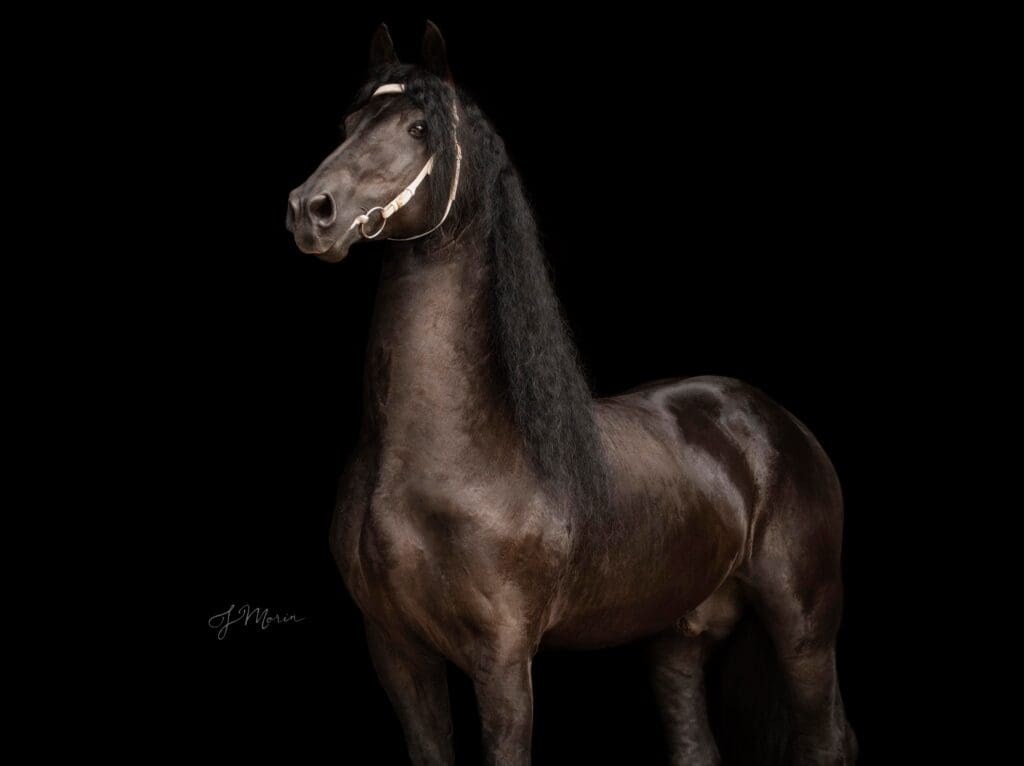
The most immediately recognizable feature of the Friesian is its coat color—traditionally and almost exclusively solid black. While chestnut Friesians existed historically, modern breeding standards require the black coat for registration. This lustrous black coat is complemented by the breed’s abundant feathering on the lower legs, and most distinctively, by the tremendously long, wavy mane and tail that give the Friesian its fairy-tale appearance.

Friesians possess a noble head with a slightly arched neck, strong shoulders, and powerful quarters. Their hooves are excellent and sturdy, crucial for supporting their substantial frame. Perhaps most famously, Friesians display a naturally high-stepping gait that showcases both power and elegance—a trait that makes them particularly eye-catching in the show ring.

Temperament and Abilities

Beyond their striking appearance, Friesians are celebrated for their exceptional temperament. They are known to be intelligent, willing, and gentle despite their imposing size. This combination of physical presence and amiable disposition has made the Friesian a versatile performer in numerous equestrian disciplines.

Historically valued as driving horses, modern Friesians excel in carriage competitions. Their natural collection and elevated gaits have also made them increasingly popular in dressage, where some have reached the highest competitive levels. Additionally, their gentle nature makes them suitable as family horses, trail companions, and even therapy animals.

The Farm at Brookside: Excellence in Friesian Breeding and Sales

A Premier Facility

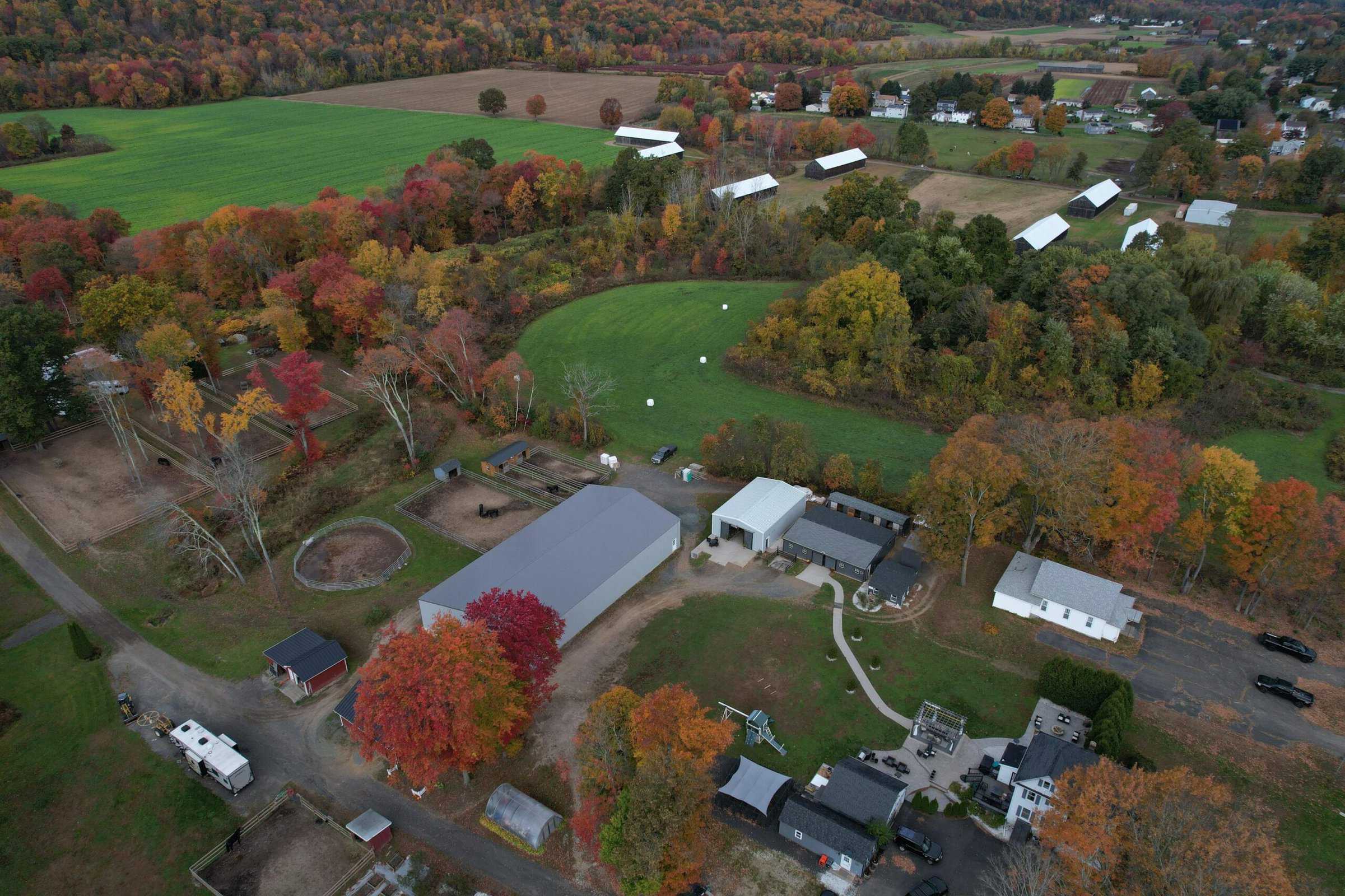
The Farm at Brookside, located in Feeding Hills, Massachusetts, represents the pinnacle of Friesian breeding and training in the northeastern United States. This private facility encompasses six barns with 25 stalls, a full-service breeding station, an outdoor riding arena (180×150 feet) with a full dressage court, and a newer indoor arena that allows for year-round training despite New England’s sometimes challenging weather.

The farm is owned and operated by Danielle and Justin Piascik and their family, whose passion for the Friesian breed translates into every aspect of their business operations. Their commitment to excellence has established The Farm at Brookside as a leading name in Friesian breeding, sales, and showing in North America.

Comprehensive Breeding Services

One of the distinguishing features of The Farm at Brookside is its state-of-the-art equine reproduction facilities. The farm functions as a full-service breeding station, offering comprehensive services for both resident and visiting stallions and mares.

Their breeding program utilizes the most current reproductive technologies and equipment to ensure the highest success rates. Services include:

  • Stallion collection and semen evaluation
  • Fresh and frozen semen shipping throughout the United States and Canada
  • Complete mare care from insemination through pregnancy confirmation
  • Foaling services with 24-hour monitoring
  • Specialized breeding packages designed to be both comprehensive and cost-effective

The Farm at Brookside maintains strict adherence to the breeding standards established by the KFPS, ensuring that their breeding program contributes positively to the continued development and preservation of the Friesian breed.

Sales Program

For those looking to purchase Friesian horses, The Farm at Brookside offers a carefully curated selection of horses ranging from foals to mature, trained animals. The sales program reflects the farm’s commitment to matching the right horse with the right owner, ensuring successful partnerships.

Understanding that the cost of these premium horses can be prohibitive for some enthusiasts, The Farm at Brookside offers flexible payment terms to make Friesian ownership more accessible. For clients with specific needs not met by the farm’s current inventory, the team also provides horse-finding services, leveraging their extensive connections with breeders in both the United States and the Netherlands.

Training and Show Preparation

The farm employs experienced trainers who specialize in developing Friesian horses for various disciplines, with particular emphasis on dressage and driving—areas where the breed’s natural talents shine. Their training philosophy emphasizes bringing out each horse’s natural abilities while preserving the willing, gentle temperament that makes Friesians so beloved.

The Farm at Brookside regularly participates in KFPS inspections (keurings) and various competitions, showcasing their horses and helping clients prepare for these events. This competition experience provides valuable exposure for their sales horses and validation of their breeding program’s quality.

Friesian Horses Market and Investment Value

The market for Friesian horses has seen significant growth in recent decades, paralleling the breed’s increasing popularity worldwide. Several factors have contributed to this trend:

  1. Media Visibility: The distinctive appearance of Friesians has made them popular choices for films, television shows, and advertisements, increasing public awareness and desire for the breed.
  2. Competitive Success: As Friesians continue to prove themselves in dressage, combined driving, and other disciplines, their reputation as performance horses has grown.
  3. Exclusivity: The strict registration requirements and relatively limited population compared to some other breeds contribute to the Friesian’s status as a premium horse.

Prices for Friesian horses vary significantly depending on factors such as age, training level, pedigree, and achievement of special designations within the KFPS system (such as “Ster” or “Sport” predicates). Generally, purchasers can expect to invest anywhere from $15,000 for young prospects to well over $100,000 for elite trained horses with superior bloodlines.

Understanding KFPS Registration and Predicates

For those considering entering the Friesian market, understanding the KFPS registration system is essential. As the official studbook for the breed, the KFPS maintains strict standards regarding which horses can be registered and used for breeding.

The main registries include:

  • Studbook: For approved breeding stallions
  • Foalbook: For horses from matings between approved stallions and foalbook mares
  • B-Book I: For horses from limited-approved stallions
  • B-Book II: For purebred Friesians where the stallion is not approved

Additionally, horses can earn various predicates that increase their value and breeding potential:

  • Star: Awarded to mares, geldings, or unapproved stallions meeting minimum standards of conformation, movement, and height
  • Sport: Recognizing achievements in competitive disciplines like dressage or driving
  • Model: An elite status for exceptional mares
  • Preferent: Awarded to mares or stallions who have produced multiple high-quality offspring

The Farm at Brookside’s expertise in navigating this complex system provides valuable guidance for buyers looking to make wise investments in the Friesian market.

Caring for Friesian Horses

Special Considerations

While Friesians share many care requirements with other horse breeds, certain characteristics necessitate special attention:

  1. Metabolic Efficiency: Friesians generally require less feed than many horses of similar size. Overfeeding can lead to obesity and associated health problems.
  2. Feather Care: The feathering on the lower legs requires regular cleaning and inspection to prevent skin conditions such as scratches or dermatitis.
  3. Mane and Tail Management: The luxurious mane and tail that make Friesians so distinctive require consistent grooming to prevent tangles and breakage. Many owners braid the mane when not showing to minimize damage.
  4. Exercise Requirements: Despite their substantial build, Friesians need regular exercise to maintain cardiovascular health and prevent weight gain.
  5. Genetic Health Concerns: Like many breeds with limited gene pools, Friesians have some breed-specific health issues that potential owners should be aware of, including a higher incidence of aortic rupture and certain connective tissue disorders.

The team at The Farm at Brookside provides comprehensive education for new owners on these special care requirements, ensuring that these magnificent horses receive appropriate management for optimal health and longevity.

Conclusion: The Enduring Allure of the Friesian

The Friesian horse, with its combination of striking beauty, gentle temperament, and athletic ability, continues to captivate horse enthusiasts worldwide. As one of North America’s premier Friesian facilities, The Farm at Brookside plays a vital role in preserving this magnificent breed while helping match these special horses with appreciative owners.

Whether your interest in Friesians lies in competitive riding, driving, breeding, or simply enjoying the company of these majestic animals, The Farm at Brookside offers the expertise, facilities, and horses to fulfill that passion. Through their dedication to excellence in breeding, training, and care, they contribute significantly to ensuring that the “Black Pearl of Friesland” continues to enchant generations of horse lovers for centuries to come.

For those contemplating entering the world of Friesian ownership, a visit to The Farm at Brookside provides not only the opportunity to see these magnificent horses in person but also to benefit from the accumulated wisdom of professionals who have dedicated their lives to this remarkable breed.


For more information about The Farm at Brookside and their Friesian horses, visit their website at thefarmatbrookside.com or contact them directly to schedule a visit to their Feeding Hills, Massachusetts facility.

The Ultimate Guide to Warmblood Horse Sales at The Farm at Brookside

Warmblood Horse Sales

Introduction to Warmbloods Horse Sales

At The Farm at Brookside, we take pride in offering premium warmblood horse sales, catering to riders and professionals seeking top-tier equine partners. Warmbloods are among the most sought-after horses in the equestrian world, renowned for their athleticism, versatility, and temperament. Bred for excellence in disciplines such as dressage, show jumping, and eventing, warmbloods combine the best traits of hot-blooded breeds like Thoroughbreds and cold-blooded draft horses.

What Makes Warmbloods Special?

Warmbloods are distinguished by their moderate build, intelligent nature, and adaptability. Unlike other horse breeds, warmbloods are not a single breed but a classification encompassing multiple European-origin breeds such as:

  • Hanoverians – Known for their powerful movement and trainability, they dominate in dressage and show jumping.
  • Dutch Warmbloods (KWPN) – Highly athletic and consistent performers in competitive disciplines.
  • Oldenburgs – Recognized for their elegance, scope, and rideability.
  • Holsteiners – With a strong jumping pedigree, they excel in both show jumping and eventing.
  • Trakehners – The lightest of the warmbloods, they are prized for their stamina and refinement.

These horses are selectively bred for performance, ensuring each generation possesses the ideal balance of power, agility, and temperament required for high-level competition and pleasure riding.

The Warmblood Horse Sales Process at The Farm at Brookside

Purchasing a warmblood is an investment in quality and performance. At The Farm at Brookside, we offer a transparent and supportive buying process to ensure every horse finds its perfect match. Here’s how it works:

1. Consultation & Needs Assessment

Understanding your goals and experience level is the first step. Whether you’re a professional seeking a competition prospect or an amateur rider looking for a reliable partner, our team will guide you toward the best fit.

2. Horse Selection

We maintain an exclusive inventory of well-bred warmbloods, each evaluated for conformation, movement, and trainability. Our selection includes:

  • Young Prospects – Ideal for those looking to develop a horse from an early stage.
  • Trained Competitors – Horses with established records in dressage, show jumping, or eventing.
  • Amateur-Friendly Mounts – Horses with steady temperaments, suitable for riders looking for a dependable partner.

3. Trial Period & Vetting

Buyers have the opportunity to ride and assess their prospective horse before making a decision. Additionally, a pre-purchase veterinary examination is encouraged to ensure the horse’s health and suitability for the intended discipline.

4. Purchase & Transition

Once a selection is made, we assist in the purchase agreement, transport arrangements, and transitioning the horse to its new home.

Why Choose The Farm at Brookside for Warmblood Horse Sales?

At The Farm at Brookside, we differentiate ourselves through our commitment to quality, integrity, and customer satisfaction. Here’s why riders and trainers trust us:

Elite Breeding Program

Our breeding program focuses on producing warmbloods with top-tier bloodlines, exceptional movement, and ideal temperaments. We partner with leading breeders in the industry to ensure genetic excellence.

Professional Training

Each horse receives structured training tailored to its discipline and development stage. Our team of professional trainers works on refining movement, responsiveness, and confidence to prepare horses for successful careers.

Personalized Buyer Support

Purchasing a horse is a significant commitment, and we are here to support you at every stage. From matching the right horse to providing after-sale guidance, our goal is to create a positive and fulfilling experience for every buyer.

Health & Wellness Focus

We prioritize the well-being of our horses by providing optimal nutrition, veterinary care, and exercise routines. Our horses are conditioned to perform at their best while maintaining soundness and longevity.

Investing in a Warmblood – What to Consider – Warmblood Horse Sales

Buying a warmblood is a long-term commitment that requires careful consideration. Here are some factors to keep in mind:

1. Purpose & Discipline

Are you looking for a dressage horse, a show jumper, or an eventing prospect? Selecting a horse with the right aptitude for your chosen discipline is essential for long-term success.

2. Experience Level

Warmbloods are highly trainable but can vary in temperament. Riders should consider their own skill level and whether they need a seasoned competitor or a young horse to develop.

3. Budget

Quality warmbloods range in price based on age, training level, pedigree, and competition record. Be prepared to invest in training, maintenance, and ongoing care.

4. Long-Term Commitment

Warmbloods have long careers, often competing well into their teens. A buyer should be ready for the responsibility of long-term care and training.

Warmblood Sales Success Stories

At The Farm at Brookside, we have successfully placed warmbloods in homes where they have flourished. Our horses have gone on to achieve notable success in competitions and have formed lasting partnerships with their new owners.

Conclusion – Find Your Next Champion at The Farm at Brookside

Whether you’re an experienced competitor or a dedicated amateur, finding the right warmblood is a crucial step in your equestrian journey. The Farm at Brookside offers an elite selection of warmbloods, expert guidance, and a seamless purchasing process to ensure every horse finds its perfect rider.

Explore our warmbloods for sale today and take the next step toward finding your ideal equine partner. Contact us to schedule a consultation or visit our farm to meet your future champion!

The Art and Science of Stallion Breeding at The Farm at Brookside

At The Farm at Brookside, we understand that successful stallion breeding is both an art and a science. Our premier breeding program is designed to support stallions and breeders with state-of-the-art facilities, experienced professionals, and a dedication to equine reproductive excellence. Whether you are an established breeder or new to the world of stallion services, we offer a full suite of breeding solutions to ensure the highest level of care and success.

Stallion Breeding

Comprehensive Stallion Breeding Services

We take great pride in offering a range of stallion services that cater to every aspect of the breeding process. Our expertise ensures that each stallion receives the highest standard of care, from reproductive management to semen collection and distribution. Our services include:

  • Semen Collection & Processing – We utilize advanced techniques to collect, evaluate, and process semen to optimize fertility and longevity.
  • Cooled & Frozen Semen Shipments – Our facility is equipped to properly handle and store semen, allowing for national and international shipments with reliable delivery.
  • On-Farm Breeding – Our breeding specialists offer live cover and artificial insemination services to accommodate various breeding preferences.
  • Stallion Management & Promotion – We provide personalized care, marketing support, and breeding management to help stallion owners maximize their horse’s potential.

State-of-the-Art Facilities

Our farm is equipped with cutting-edge reproductive technology, climate-controlled storage, and expert veterinary oversight to maintain the highest success rates. We provide safe and comfortable accommodations for stallions, ensuring their well-being and peak reproductive performance.

Experienced Equine Professionals

Our team consists of dedicated reproductive specialists, veterinarians, and seasoned horsemen who have years of experience in equine breeding. Their expertise ensures precise handling, thorough reproductive evaluations, and professional support throughout the breeding process.

Commitment to Excellence

At The Farm at Brookside, we are committed to upholding the highest industry standards in stallion breeding. Whether you are looking to breed a champion or preserve superior bloodlines, our stallion breeding services are designed to provide reliability, expertise, and exceptional results. Contact us today to learn more about how we can assist you in your breeding journey.

Mare Breeding FAQ: 9 Frequently Asked Questions You Need to Know

Mare Services

Introduction

Below is a comprehensive Mare Breeding FAQ: Breeding a mare is a rewarding yet complex process that requires careful planning, expert care, and a deep understanding of the mare’s reproductive cycle. Whether you’re new to breeding or looking to optimize your mare’s chances of a successful pregnancy, it’s essential to be informed about the entire process—from estrous cycles to veterinary care and foaling.

Mare Breeding FAQ

At The Farm at Brookside, we offer premier mare breeding services designed to support every step of your mare’s reproductive journey. With state-of-the-art facilities and experienced equine specialists, we ensure the highest standards of care for both mare and foal. Below, we’ve compiled answers to some of the most common questions about mare breeding to help guide you through this process.


Mare Breeding FAQ: Frequently Asked Questions

1. When is the best time to breed a mare?

Mares are seasonally polyestrous, meaning they experience multiple heat cycles during the breeding season, typically from spring through early fall. The best time to breed is during the spring and summer months when they cycle regularly due to increased daylight hours. This ensures the foal is born in favorable weather conditions the following year.

2. How do I know when my mare is in heat?

Mares typically show estrus (heat) signs every 21 days, lasting between 5 to 7 days. Common signs include:

  • Increased interest in stallions
  • Tail raising
  • Frequent urination
  • Restlessness or affectionate behavior
    A veterinarian can confirm heat through ultrasound examinations and hormonal testing.

3. What breeding methods are available?

There are several breeding options, including:

  • Live Cover: The mare is physically bred by the stallion, often required in Thoroughbred breeding.
  • Artificial Insemination (AI): Frozen or fresh semen is collected and placed in the mare’s uterus.
  • Embryo Transfer (ET): An embryo is flushed from the donor mare and implanted in a recipient mare.

At The Farm at Brookside, we provide AI and embryo transfer services to maximize breeding success while ensuring the safety and well-being of mares and foals.

4. How can I increase the chances of conception?

To improve conception rates:

  • Ensure your mare is in optimal health with a balanced diet and regular veterinary care.
  • Use ovulation timing techniques, such as ultrasound monitoring, to breed at the right moment.
  • Consider hormone treatments if your mare has irregular cycles.
  • Work with a reproductive specialist for advanced breeding strategies.

5. How long is a mare’s pregnancy?

A mare’s gestation period is approximately 11 months (320-370 days). Most foals are born around 340 days after conception, though some pregnancies can be shorter or longer.

6. What are signs that a mare is pregnant?

Veterinary ultrasounds can detect pregnancy as early as 14 days post-breeding. Other signs include:

  • Lack of heat cycles
  • Subtle behavioral changes
  • Physical changes in later stages (such as abdominal enlargement and udder development)

7. How do I care for a pregnant mare?

Pregnant mares require:

  • Nutritionally balanced diets with increased calories and minerals in the last trimester.
  • Regular deworming and vaccinations to ensure a healthy foal.
  • Exercise and movement to maintain good health.
  • Veterinary monitoring throughout gestation.

At The Farm at Brookside, we offer comprehensive prenatal care, ensuring your mare and foal receive the best support throughout pregnancy.

8. What should I expect during foaling?

Signs of impending foaling include:

  • Udder filling within 2-4 weeks of foaling.
  • Waxing (colostrum leakage) a few days before birth.
  • Restlessness, sweating, and lying down frequently as labor begins.

Foaling occurs in three stages, typically lasting 30 minutes to an hour once active labor starts. If there are complications or delays, veterinary assistance is crucial.

9. Mare Breeding FAQ: Can a mare be bred again after foaling?

Yes, mares can return to estrus as early as 7-14 days post-foaling, known as a foal heat. However, many breeders wait for a later cycle to ensure the mare has fully recovered.


Mare Breeding FAQ: Conclusion

Breeding a mare is a significant commitment that requires expert guidance, careful planning, and top-quality care to ensure both mare and foal thrive. At The Farm at Brookside, we specialize in mare breeding services, offering everything from reproductive management to foaling support. We hope this Mare Breeding FAQ has been helpful.

If you’re considering breeding your mare or need expert care, contact The Farm at Brookside today to discuss how we can help you achieve a successful breeding season. Let’s bring your future champion into the world together!

📞 Call or Inquire Today!